Two shingle styles cover most Bellevue roofs, and the difference shows the moment you look up at a house on Bellevue Way versus one near Crossroads Park. Laminated architectural shingles use two fused layers of fiberglass mat for a thicker, textured look, while three-tab shingles are one flat layer cut into evenly spaced tabs. Both start from the same base material; what changes is the lamination, the weight per bundle, and how each reads from the street.
What Three-Tab Actually Is
A three-tab shingle is a single fiberglass mat layer coated with asphalt and mineral granules, cut into three tabs per shingle so each strip reads as three separate shingles once installed. It lies flat against the deck with no built-up thickness. That flatness is the whole identity of the product. It is lighter, thinner, and cheaper to manufacture than a laminated shingle, which is why it has stayed on the market for smaller Bellevue outbuildings and budget-driven jobs.
What Laminated Shingles Add
Architectural shingles use double-layer lamination: a base fiberglass mat shingle with a second, smaller reinforcing layer glued to it before granules go on. That second layer is what creates the raised, uneven shadow line homeowners notice on roofs around Northeast Bellevue and Bridle Trails. It is not decorative padding. The extra layer adds thickness at the tab edges, which changes how the shingle sheds water and how it performs against wind compared with a flat single-layer product.
Bundle Weight Per Square
A square covers 100 square feet of roof, and the two shingle types do not weigh the same per square. Three-tab typically runs lighter per bundle because it is a single mat layer with less asphalt and fewer granules overall. Laminated shingles run heavier per square because of the second lamination layer. That weight difference matters on a reroof in Bellevue, since Bellevue requires a building permit if a recover adds more than 5 percent to the existing roof's total weight.
Wind Rating Differences
Wind rating is tested and stated by the manufacturer, and it is not automatically higher just because a shingle is laminated, but the double-layer construction generally gives architectural shingles a higher rated wind resistance than a comparable three-tab product. That matters more from falling limbs during winter storms off the Pacific than from straight wind uplift alone, since this is not a market built around sustained hurricane-force wind. A shingle's actual rating always depends on the specific product line and how it was nailed down.
The Nailing Zone Explained
Every shingle, three-tab or laminated, has a printed nailing zone, a horizontal band where the manufacturer specifies nail placement to hold the shingle against wind and keep the warranty valid. On a three-tab, that zone sits across a flat single layer. On a laminated shingle, the nailing zone crosses both fused layers, giving the nail more material to bite into. Missing the nailing zone is a common installation error on either product, and it is one a homeowner cannot see once the roof is finished.
Reading The Shadow Line
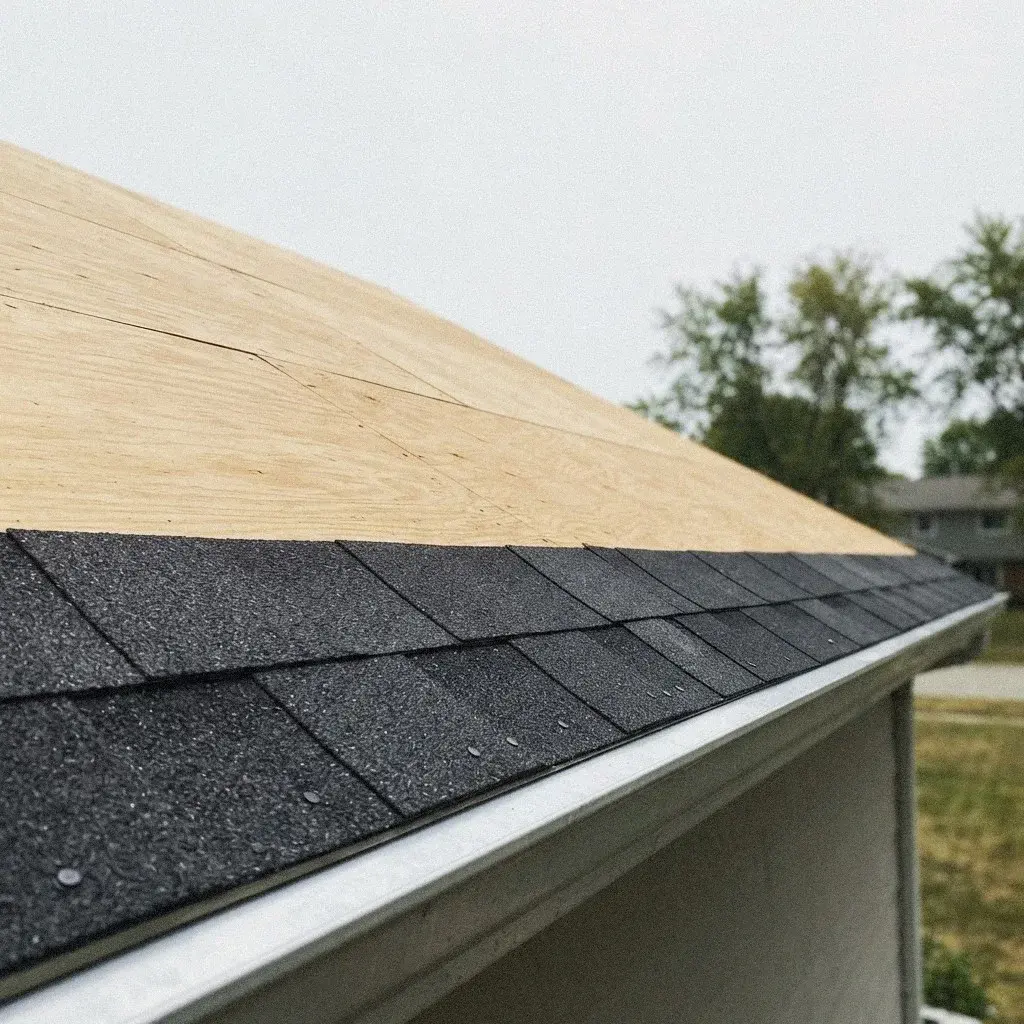
The shadow line is the shaded band that appears where the laminated shingle's second layer sits slightly raised above the base layer, giving the roof a dimensional, shingled-in-depth look from the street. Three-tab shingles have no shadow line because there is only one flat layer; the cutouts create a repeating grid pattern instead. Walking a block in Wilburton or along the 148th Avenue NE corridor, the shadow line is usually the fastest way to tell the two products apart without climbing a ladder.
Starter Course And Ridge Cap
Both shingle types need a starter course, a strip of shingles installed along the eaves before the first full course, to seal the lowest edge against wind-driven rain. Ridge cap shingles, which bend over the roof's peak, are also used with either field shingle, though many laminated shingle lines pair with a thicker, purpose-made ridge cap to match the dimensional look. Getting the starter course wrong is a common source of edge leaks on roofs anywhere from Factoria to Newport Hills.
Stated Warranty Length
Manufacturers state longer limited warranty periods on architectural shingles than on three-tab shingles, tied to the extra layer and heavier asphalt content. Three-tab warranties are shorter and reflect the simpler single-layer build. A stated warranty length is not a promise about how long a roof performs in a wet climate like Bellevue's; it is a manufacturer's coverage term with its own conditions, and it should be read directly rather than assumed from the shingle's category.
Why Three-Tab Still Sells
Given the differences, three-tab persists mainly on price. It costs less per square, and for a detached garage, a shed roof, or a rental property near Eastgate where curb appeal is not the priority, that lower cost can be the deciding factor. Some older homes were also built with roof framing sized for a lighter covering, which occasionally makes a heavier laminated shingle a bigger structural conversation than it would be on newer construction.
Matching Shingles To A Roof
Neither shingle type is a universal right answer. The choice depends on the roof's existing weight allowance, the homeowner's budget, and how much the shadow line and dimensional look matter for a specific street, whether that is a rambler near Crossroads or a two-story home closer to Lake Hills. A roof's slope, existing layers, and framing all factor into which product a licensed pro would actually recommend for a given house.
Getting An Informed Opinion
Three-tab still sells in Bellevue because it costs less up front, and some smaller rental properties or detached garages near Crossroads or Eastgate don't need the heavier look. Its flat profile and lighter bundle weight make it easier to carry up steep hillside lots. Laminated shingles cost more per square but give better wind performance and a longer stated warranty, which is why most homeowners near Somerset or Bridle Trails choose them for a primary roof today.
Dealing with this in your home?
Bellevue roofs age on their own schedule. Wooded lots near Bridle Trails and Somerset stay shaded long after storms pass, and conifer cover keeps surfaces from ever fully drying between fronts. Add a reroof window that tightens once summer ends, and small maintenance calls turn urgent fast. The sections below sort out timing, materials, and who actually answers for the work overhead.