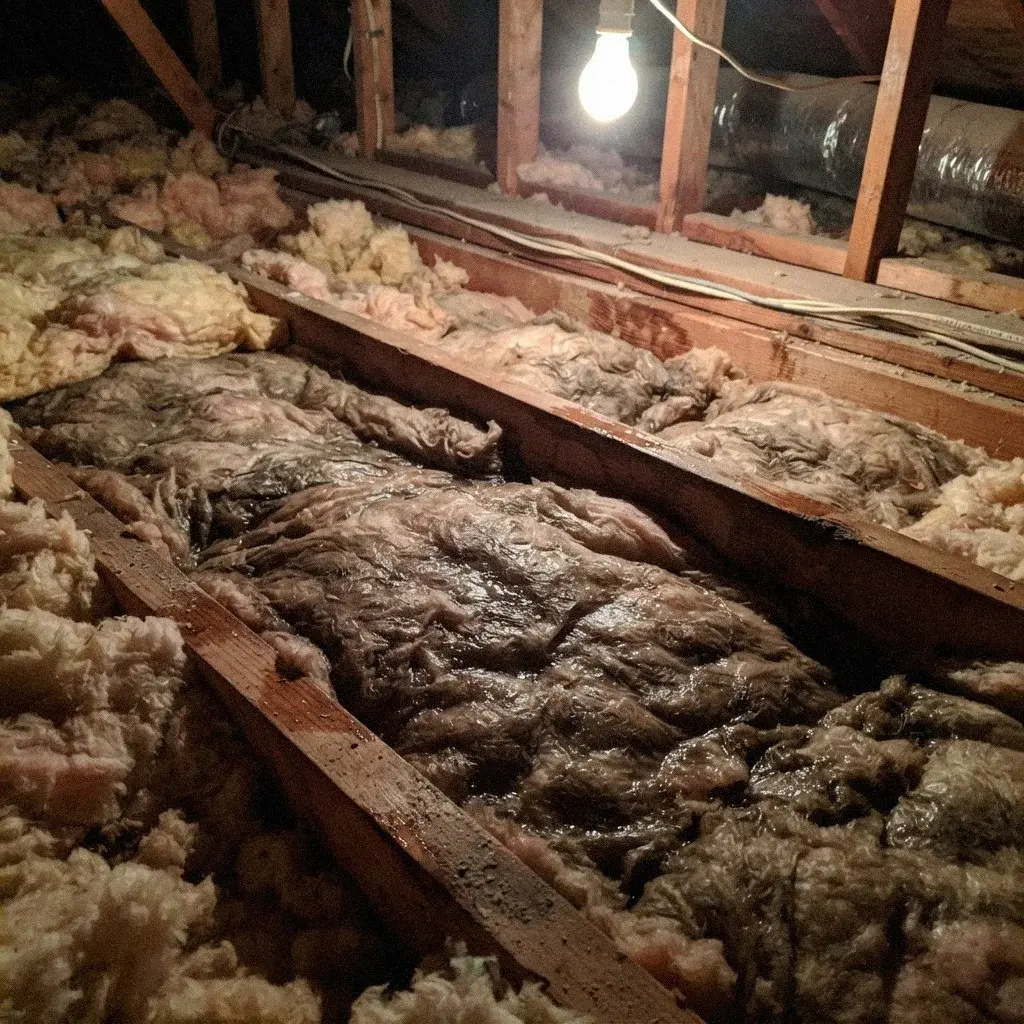
The Conditions Behind It
Bellevue's marine climate keeps outdoor air cool and damp for long stretches, so warm indoor air migrating into an unheated attic condenses fast on the cold underside of the decking and rafters. Neighborhoods with heavy conifer cover, like Bridle Trails and Somerset, see roofs that never fully dry between rains, which compounds the problem once vent airflow is out of balance.
Many Bellevue attics rely on soffit intake paired with ridge or roof vents, following the vent-ratio approach referenced in the state residential code. When soffit vents get painted over, insulated shut, or blocked by debris, or when a bath fan vents into the attic instead of through the roof or wall, moist air has nowhere to go but onto the sheathing.
A quote for a Bellevue reroof should read as one number, not a number plus tax added later. Sales tax applies to labor as well as materials here, and a contractor cannot legally charge it on materials alone. Ask the pros we connect you with to show the tax separately so the total is not a surprise.
Quick Facts on This
- Location
- Underside of roof decking and rafters throughout the attic, often worst near the ridge.
- Appearance
- Damp or frosted sheathing, dark mold blotches, and beading on exposed nail tips.
- Cause
- Warm indoor air reaching a cold attic through gaps, poor insulation, or misrouted bath and dryer vents.
- Progression
- Weakens and delaminates roof sheathing, feeds mold growth, and shortens the life of the whole roof over repeated wet seasons.
- Damage
- Ignored condensation soaks insulation, rots roof decking and rafters, and invites mold through the attic and ceiling below.
- Roof Materials
- Condensation risk in Bellevue peaks during the coldest, dampest stretches of the wet season, when indoor heating runs constantly against consistently cold outdoor air. The gap between warm indoor air and cold attic air is largest then, which is exactly when soffit and ridge airflow needs to be unobstructed.
- Roof Type
- an estimated $450–$2600
Why It Gets More Expensive
Attic condensation gets mistaken for a roof leak, since both leave water stains on the decking near Bellevue's wooded lots. A leak traces to one spot, usually a valley, flashing, or pipe boot, and keeps the same shape after each rain. Condensation spreads evenly across large sections of sheathing regardless of rainfall, appearing worst on cold, still mornings rather than during storms. The separating test is timing and pattern. Check the attic the morning after a dry, cold night: frost or damp sheathing spread broadly, with no rain in the prior day, points to condensation. A stain that only appears or worsens during active rain, tracing back to a flashing or penetration, points to a leak instead.
What Fixing It Involves
Real correction rebalances intake and exhaust: clearing or adding soffit vents, adding or repairing ridge venting, and rerouting any bath or dryer duct that dead-ends in the attic so it terminates outside. This addresses the airflow that is actually driving moisture onto the decking, rather than papering over the symptom.
Painting over moldy sheathing or laying down a vapor barrier without fixing airflow only hides the sign temporarily; the moisture keeps arriving and the substrate keeps weakening underneath. Lasting correction pairs proper attic ventilation with sealing the interior air leaks that push moisture upward in the first place.
Wet-season damage tends to hide in the details: a valley that channels water where it shouldn't, a vent boot gone brittle, moss holding moisture against the surface longer than it should sit there. None of that shows from the ground. A closer inspection catches it while a repair is still cheaper than waiting for it to spread underneath.
A vented attic against blocked vents: the signs of each
| Your situation |
What normally fits |
|---|
| Comp shingle ages differently on a shaded slope than on one that catches sun most of the day. Moss holds moisture against the surface and lifts edges long before the shingle itself wears out, which is why two roofs of the same age can need very different work. A pro who looks at yours in person can tell which stage you're actually at. | Wet-season damage rarely announces itself. Water works into flashings and valleys over weeks of overcast weather, moss lifts shingle edges, and gutters clogged by fall debris back up against the roofline. The pros we connect you with check attic ventilation and decking condition, not just the surface, before pricing any repair or reroof. |
| Shade and moisture do more damage than age alone in this climate. A roof under heavy tree cover can wear out years before an identical one in open sun, simply because it never fully dries between rains. The licensed pros we connect you with know how to read that difference on sight. | What shortens a Bellevue roof isn't one storm but the slow accumulation of wet weeks with no real drying time between them. Moss lifts shingle edges, valleys clog, flashing works loose, and the damage compounds quietly for years before a homeowner sees a stain on the ceiling. Catching that pattern early is the whole point of a routine roof check. |
| Moss is not just an appearance problem. It holds water against shingles, lifts edges, and shortens the life of a roof that would otherwise last for years. Left alone through several wet seasons, it turns a simple cleaning job into a full section of damaged decking. Catching it early keeps the fix small. | Every roof problem has a cause, not just a symptom. Trapped moisture, blocked ventilation, and shaded surfaces that never fully dry all shorten a roof's life in their own way. The licensed pros we connect you with trace the actual source before proposing work, so a repair addresses what's happening under the surface, not just the spot that's visibly failing. |
What You Can Safely Do Yourself
A homeowner can check from inside the house for musty smells, peek into the attic hatch for frost or dark staining on the sheathing, and look from the ground for blocked or painted-shut soffit vents along the eave. Measuring actual vent airflow, inspecting the ridge, and correcting any duct venting into the attic is roof-and-attic work for the licensed pros we connect you with.
How It Affects the Rooms Below
Damp, moldy attic sheathing is a mold-growth environment, and prolonged exposure to mold and mildew is a recognized indoor air quality concern for people in the house below. Left unaddressed through repeated wet seasons, it also weakens the decking itself, shortening the life of the whole roof assembly.
Ready To Get Your Roof Looked At?
Most attic condensation jobs in Bellevue land between an estimated $450 and $2600, and the roof decides where inside that. Rot and soft decking here come from trapped moisture and poor attic ventilation, not insects, so pest treatment rarely belongs in a Bellevue reroof estimate. If the licensed pros we connect you with find soft sheathing near Bridle Trails or Somerset's shaded lots, expect a conversation about ventilation and skip sheathing, not a pest bill. pricing guide.