Emergency Roof Tarping
Fast temporary cover for an open, leaking roof in Bellevue
Learn about Emergency Roof Tarping
Composition shingle covers most Bellevue homes, with cedar shake still common enough that shingle conversions are routine work. Whether your roof sits near Downtown Park or up toward the Cougar Mountain slopes, drainage matters more than material choice. Water shed against a hillside lot can undermine soil and foundations, not just soak the roof deck.
A Bellevue roof job usually starts with a phone call describing what's wrong, then a scheduled visit where the licensed pros we connect you with get on the roof itself, not just the ground. From Somerset to Bridle Trails, they check flashing, valleys, and moss buildup before writing up a plan, then handle the work and check back after the next wet stretch.
Call (425) 380-0932 or book online. We ask a few quick questions - where the water is showing, how old the roof is, whether anything is actively dripping - and connect you with the soonest visit that works for you.
One of the licensed pros we connect you with goes up on the roof, photographs what they find, and traces the leak back to where it is actually getting in rather than where the stain is. The plan and the estimated price are explained before any work starts.
Water travels along a rafter and shows up feet from where it got in, so a repair aimed at the stain looks successful for a season and then fails in the same place. The flashing, the boot or the lifted course that let it in is what gets replaced.
The work is not finished when the hole is covered. Decking is checked for soft spots, the surrounding courses are re-sealed, the debris is swept for nails, and you get the photographs of what was done underneath.
From there it's a plan: tear-off or recover, comp shingle or cedar conversion, sheathing repair if needed. Work gets scheduled around the dry window, since crews near Bellevue Way and the Wilburton corridor book up fast between June and September. After the job, gutters and downspouts get checked so the next wet season doesn't undo it.
Someone local picks up, works out how urgent it is, and schedules the soonest available visit, plus a few simple things to do in the meantime.
They arrive ready to work rather than only to look, with tarps, sealant and enough material to stop an active leak on the same visit where the weather allows it.
The licensed pros we connect you with trace the water back to the entry point, cover it properly, and tell you plainly whether it is a repair or the start of a replacement.
You get photographs of the work from the roof, not a verbal summary from the driveway - which is what stops a job being called finished while a course of flashing is still open.
Wait past the dry months and Bellevue weather stops cooperating. The window from June through September is when reroofs and repairs actually get scheduled around Bridle Trails, Somerset, and the Lakemont…
Wet-season damage in Bellevue rarely announces itself. Water works quietly through flashing and valleys near Somerset and Lakemont while the roof looks fine from the driveway.
The dry window for reroofing runs roughly June through September, which means crews near Crossroads and Factoria book that stretch early. Outside those months, valleys and penetrations take the punishment from repeated wetting rather than any single storm. The licensed pros we connect you with plan tear-offs and recovers around that short calendar.
Fast temporary cover for an open, leaking roof in Bellevue
Learn about Emergency Roof Tarping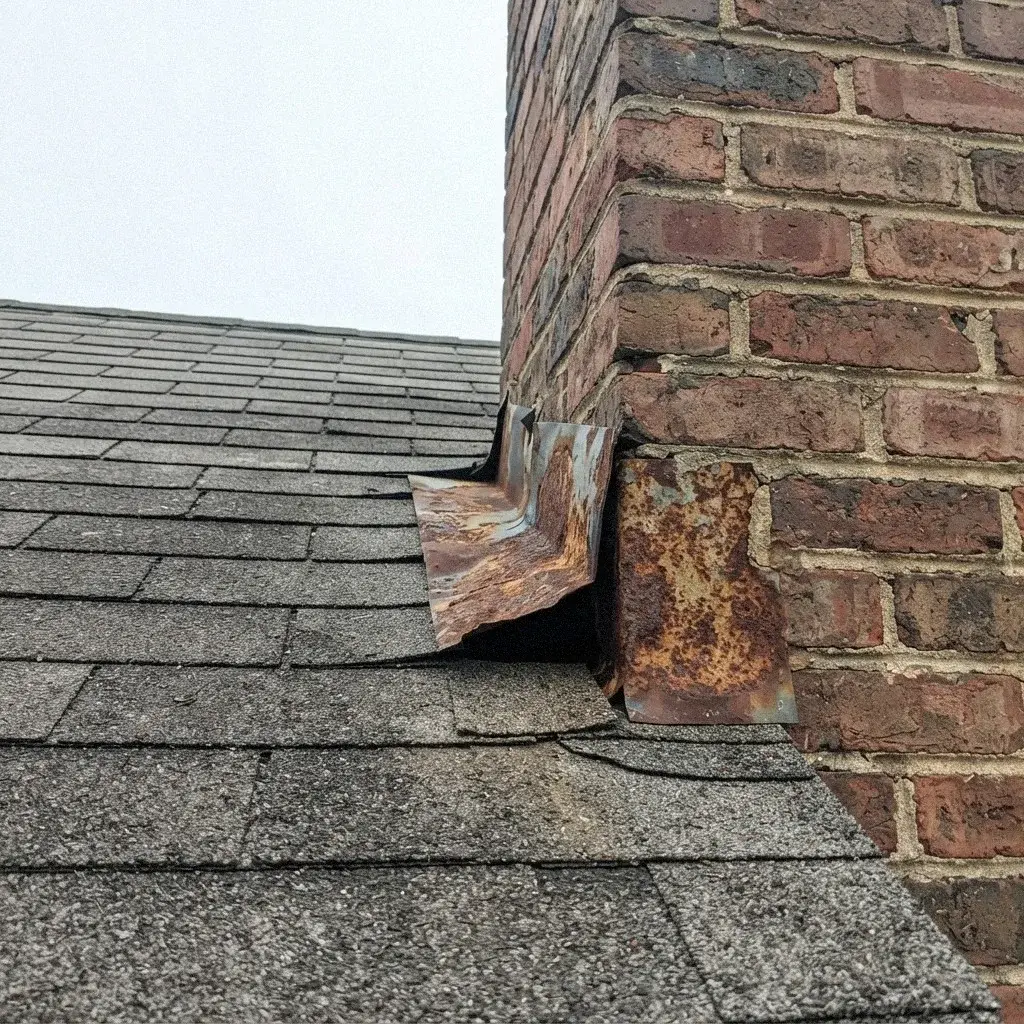
Fixing the metal and seals where your roof meets a chimney or wall.
Learn about Flashing & Chimney Repair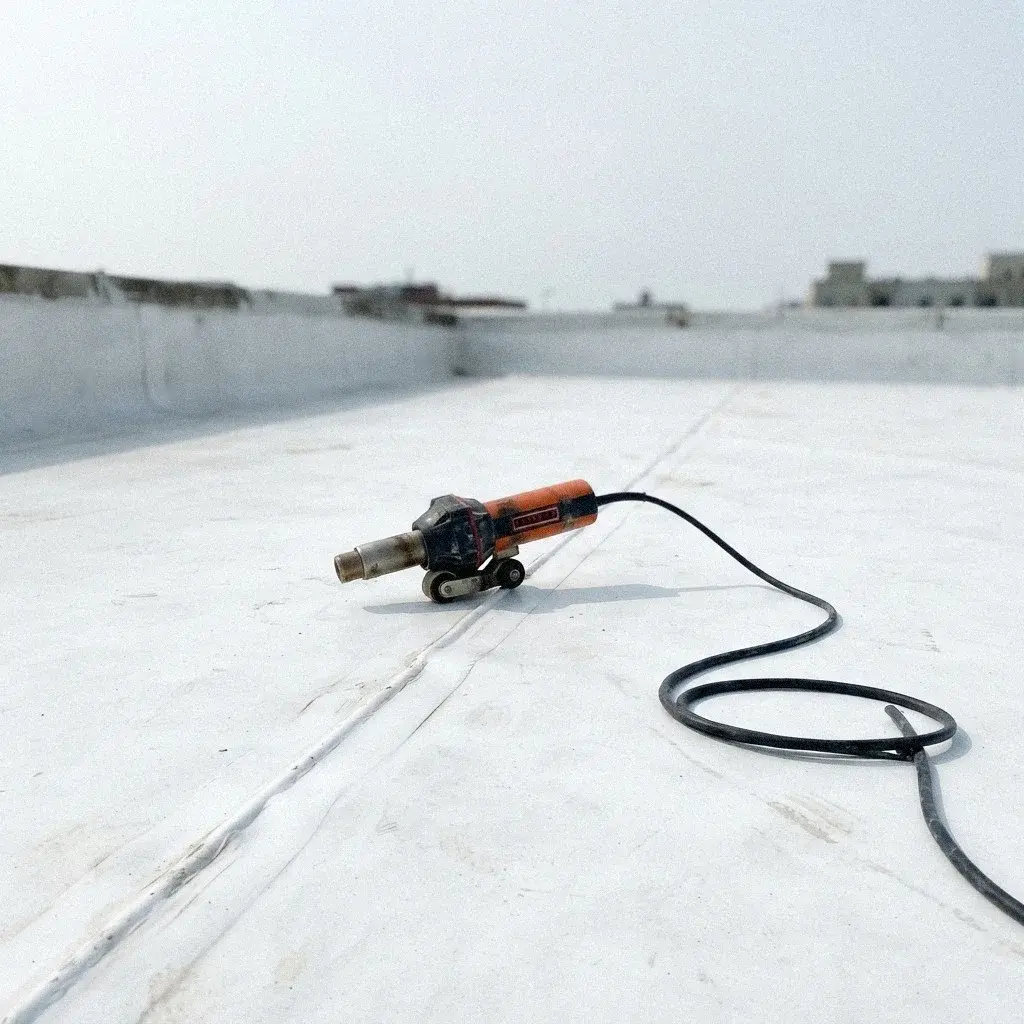
Membrane roofing built to shed water, not hold it.
Learn about Flat & Low-Slope Roofing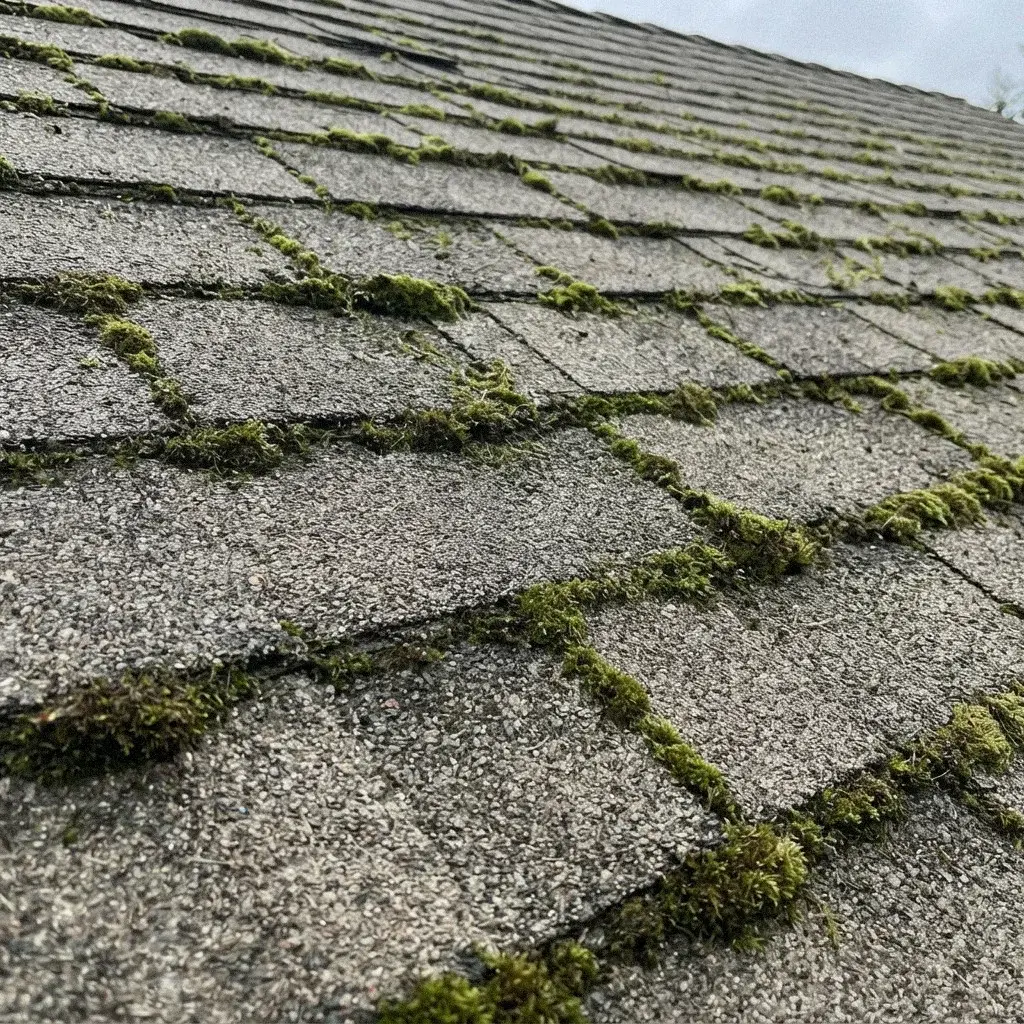
Soft wash moss and algae removal built to protect the shingle, not strip it.
Learn about Moss Removal & Roof Cleaning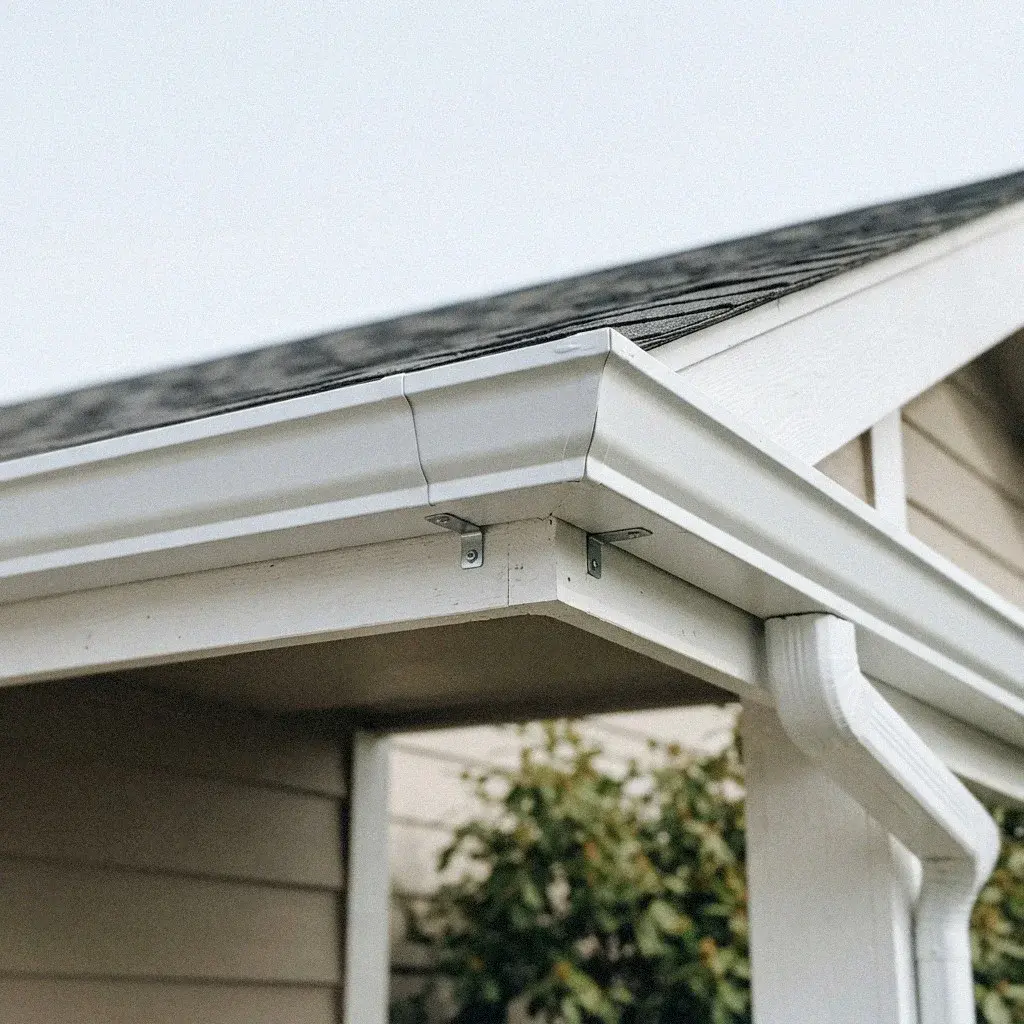
Rehang what can be saved, replace what can't, before fascia rot spreads.
Learn about Gutter Repair & Replacement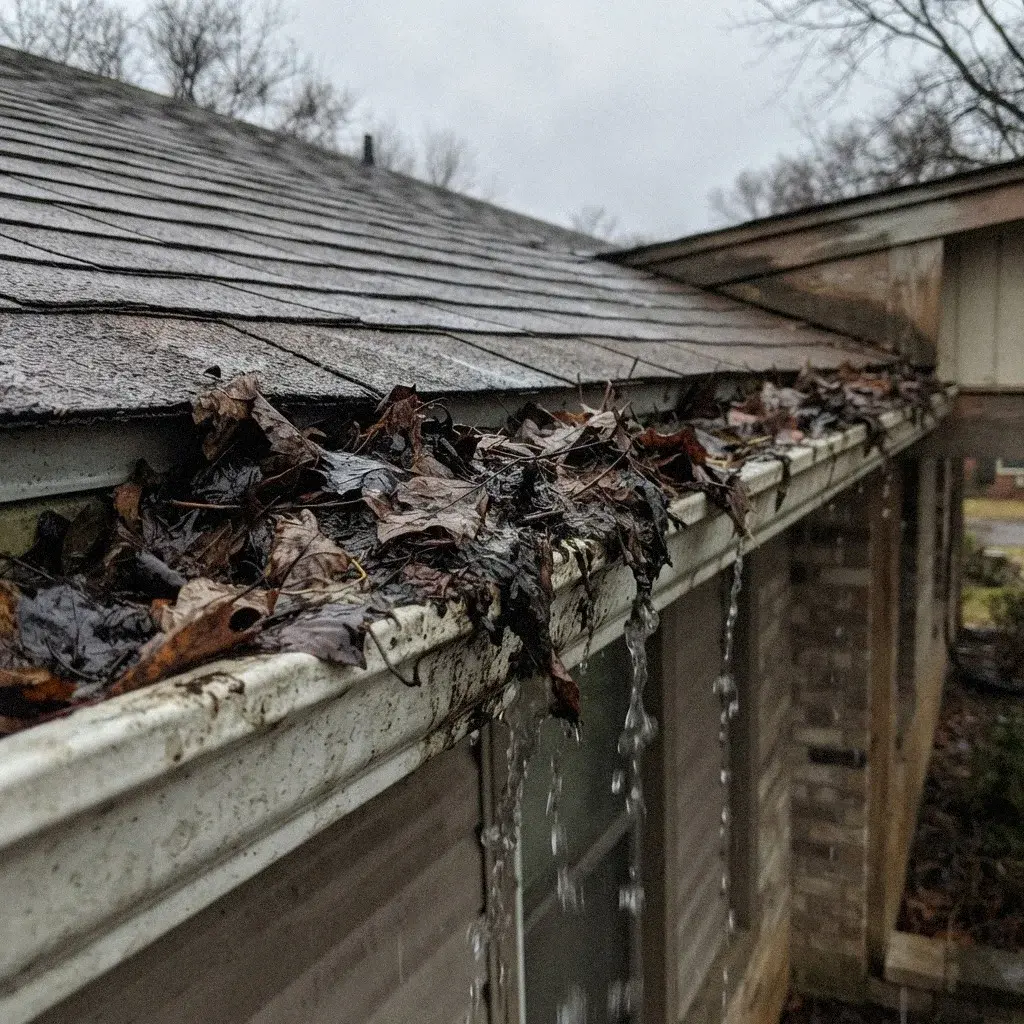
Clear gutters and downspouts, with guard options that cut how often you climb up there.
Learn about Gutter Cleaning & Gutter Guards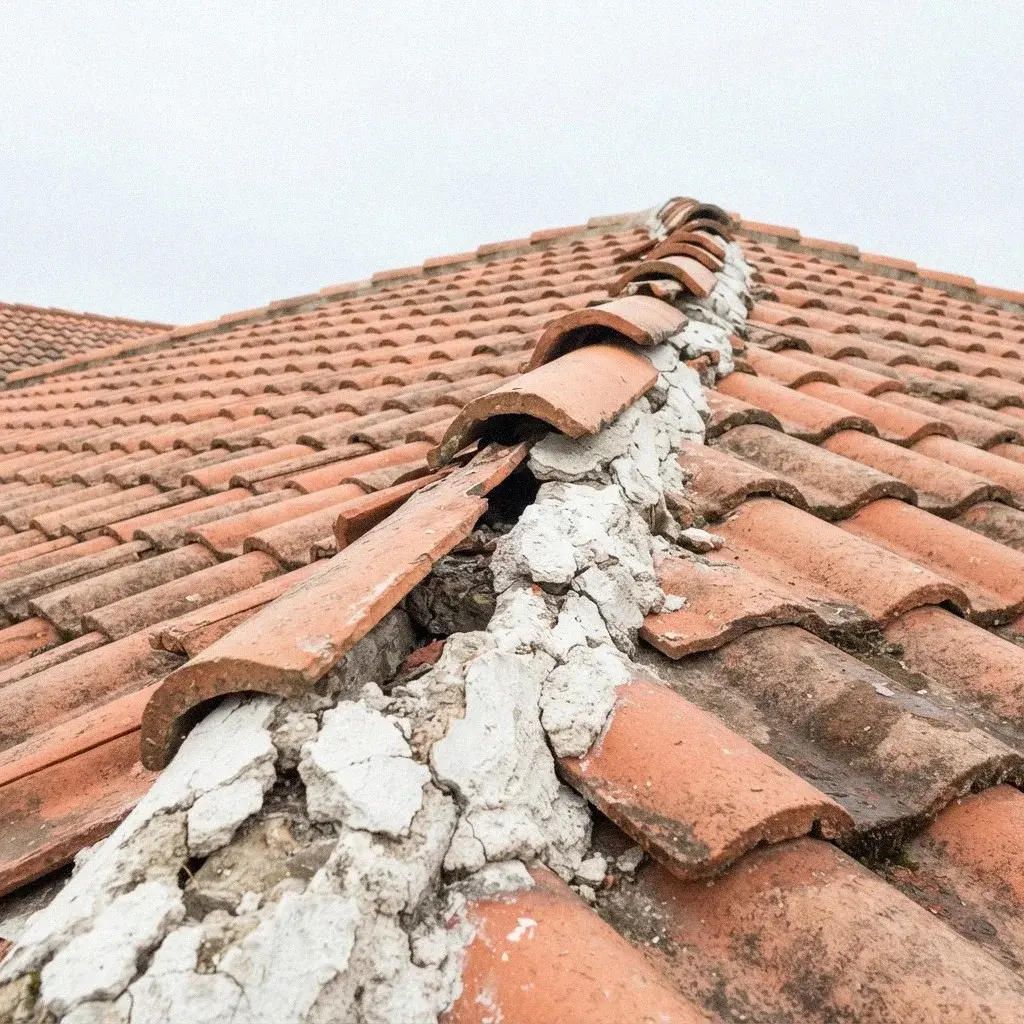
A reroof near Downtown Bellevue or out toward Newport Hills doesn't always trigger a permit, and the rules turn on weight added and sheathing replaced, not on a blanket rule either way. Get a written scope, ask about layers already on the roof, and let the licensed pros we connect you with walk you through what your address actually requires.
Bellevue sits in the heart of King County, and its mix of older and newer properties each bring their own Roofing headaches. Whether it's Emergency Roof Tarping, Flashing & Chimney Repair, Flat & Low-Slope Roofing, the goal is the same: fix the real cause, not just what you can see today.
Every roof is different, so it starts with somebody up there: the pitch, the age of the covering, the state of the flashing and how sound the decking underneath still is. It is the same care whether the job is Moss Removal & Roof Cleaning and Gutter Repair & Replacement.
Bellevue WA Roof Repair covers Bellevue and nearby towns throughout King County, from Downtown Bellevue and Issaquah to Kirkland and Kenmore. Every roofer you are put in touch with is licensed, insured and already working in this area rather than routed in from a distant call center. Familiar ground includes Bellevue Square, Bellevue Downtown Park, Meydenbauer Bay Park, Bellevue City Hall.
Homes and businesses right across King County. Call to check your street is covered and to have a licensed local roofer take a look.
Bellevue roofs fail from moisture, not drama. Long wet-season stretches from October through January keep surfaces damp, and shaded lots near Bridle Trails or Somerset grow moss fast under the conifer canopy. The licensed pros we connect you with handle reroofs, moss removal, and flashing repairs across neighborhoods from Wilburton to Enatai.
The city's landmark district: dense towers over a small older commercial core.
Roof repair in Downtown BellevueHistoric Front Street rooflines meet a 1998-built hillside neighborhood, side by side.
Roof repair in IssaquahA waterfront core, mid-century blocks further out, and new condo towers all under one roof age chart.
Roof repair in KirklandA lakefront city with 1970s-1990s housing stock and a short, busy reroof season.
Roof repair in KenmoreA split city with historic downtown blocks and newer Canyon Park subdivisions under one roof.
Roof repair in BothellRanch-era roofs from Bellevue's original planned subdivision, now mid-remodel across the block.
Roof repair in Lake HillsWooded quarter-acre lots around a state park, plus a multifamily corridor on 148th.
Roof repair in Bridle TrailsBellevue's second-densest neighborhood, where 1960s-1980s complexes and houses share the same aging roofs.
Roof repair in CrossroadsIn Bellevue, most roof calls trace back to moss and slow leaks, not storms. Shaded lots in Bridle Trails and the Cougar Mountain slopes near Lakemont hold dampness under conifer cover, letting moss lift shingle edges. Elsewhere, worn flashing around valleys and clogged gutters near Somerset send water into attics through the long wet season. Age plays a part too, since much of the housing near Crossroads and Lake Hills dates to the 1970s and needs a closer look.
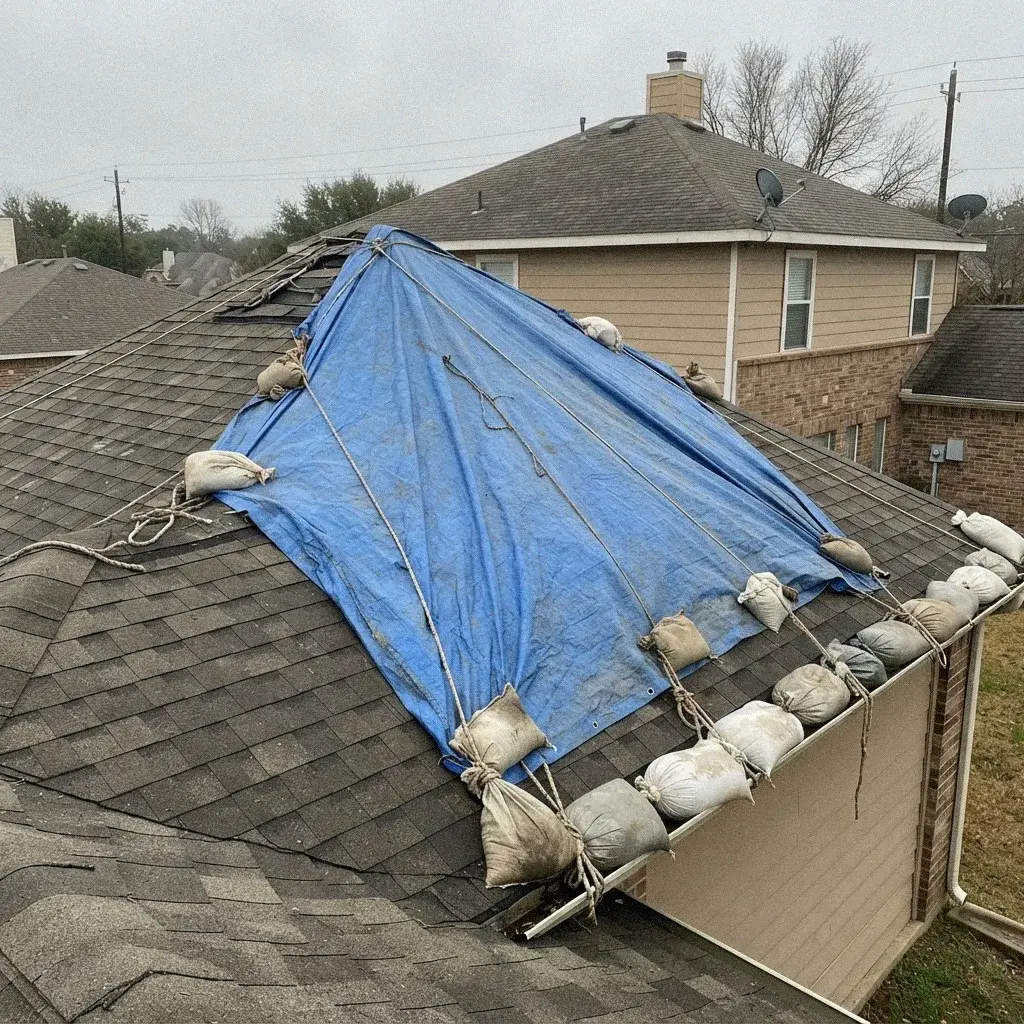
A tarp call usually starts with an active leak inside the house — water stain spreading across a ceiling in a Bellevue home, or water actually dripping during a wet-season storm. Sometimes it is visible from outside: a limb has torn through composition shingle or cedar shake, or a section of decking is exposed after wind or a falling branch near Bridle Trails or Cougar Mountain Regional Wildland Park. Either way, the roof is open to weather and cannot wait for a scheduled repair.
Emergency Roof Tarping →Rust streaks or dark staining below a chimney, valley, or sidewall usually mean the flashing under it has started to fail, not the shingles above it. In Bellevue's long wet season, that staining often shows up gradually over a winter rather than after one storm. If the streaking follows a straight line down the siding or brick, trace it back up to the flashing joint before assuming the roof covering itself is the problem.
Flashing & Chimney Repair →A flat or low-slope roof in Bellevue fails at different points than a shingle roof. Watch the membrane seams near parapet walls, the area around roof drains and scuppers, and any spot where water sits flat instead of running off. Ponding water that lasts more than a day or two signals the roof lacks positive slope, and that standing water works into any seam failure or blister far faster than a sloped roof would ever allow.
Flat & Low-Slope Roofing →Black streaking on north-facing slopes usually means algae, not moss, and it spreads fastest where the roof stays shaded most of the day. Bellevue lots under heavy fir and cedar canopy see this on the shingle courses that never fully dry out between storms. It looks like dirt at first, then darkens into streaks that run down from the ridge. Left alone, the streaking spreads and starts to hide granule loss underneath it.
Moss Removal & Roof Cleaning →A gutter run that dips in the middle, drips between seams, or leans out at the top has usually gone past a quick fix. Hangers pull loose from soaked fascia, spikes back out of the wood, and the pitch that once carried water to the downspout flattens out. Left alone in a Bellevue wet season, that water sheets down the siding instead of into the elbow below, and the fascia behind the gutter starts to soften.
Gutter Repair & Replacement →Clogged gutters usually announce themselves before a homeowner climbs a ladder to check. Water tracks down the siding in a stain below a low spot, or it sheets over the front edge during a hard rain instead of running through the downspout. Around Bellevue, needle debris from Douglas fir and western red cedar packs into the trough faster than leaf debris alone would, so a gutter can look shallow and still be fully blocked underneath a mat of needles and grit.
Gutter Cleaning & Gutter Guards →Storm season prep, early warning signs, and practical advice for Bellevue homeowners.
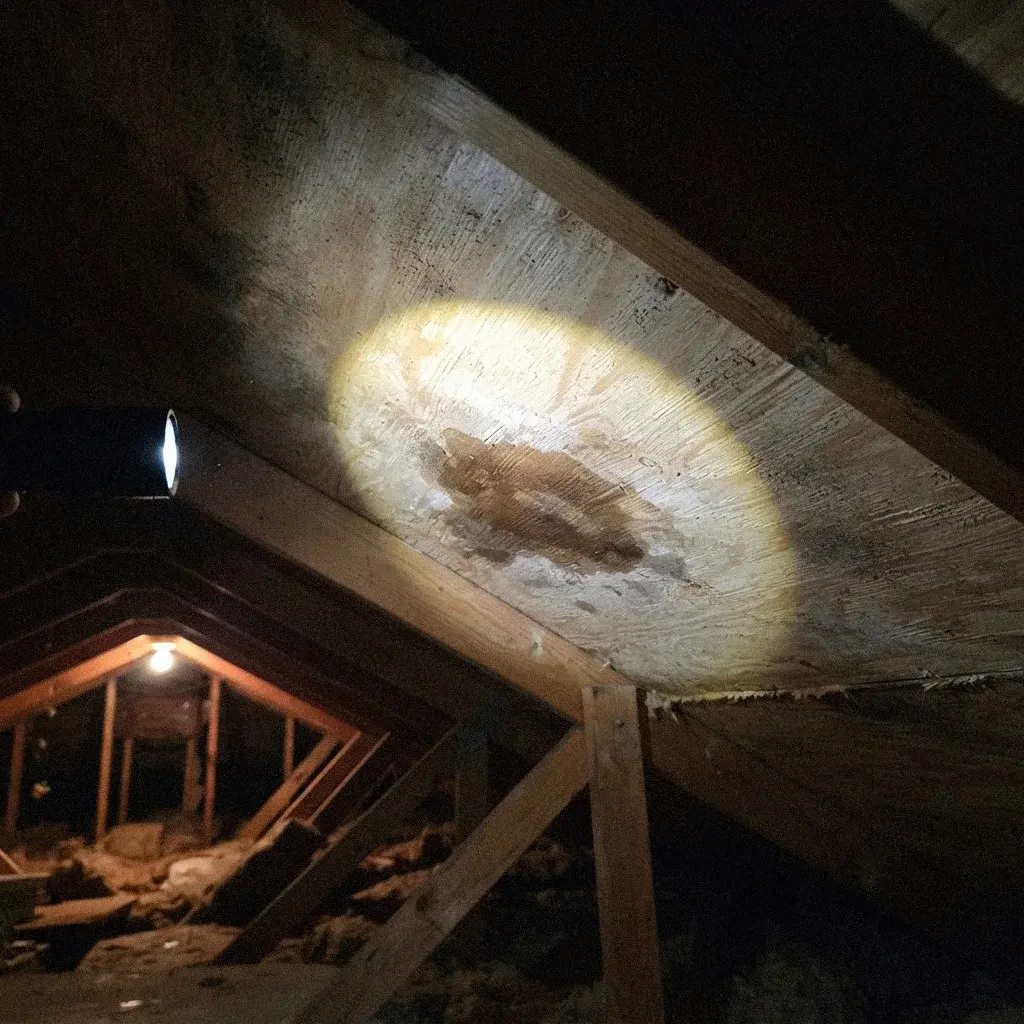
Bellevue roofs rarely fail from one storm. They wear out from months of damp shade, clogged valleys, and weak flashing details that never get a real chance to dry between rains.
Read article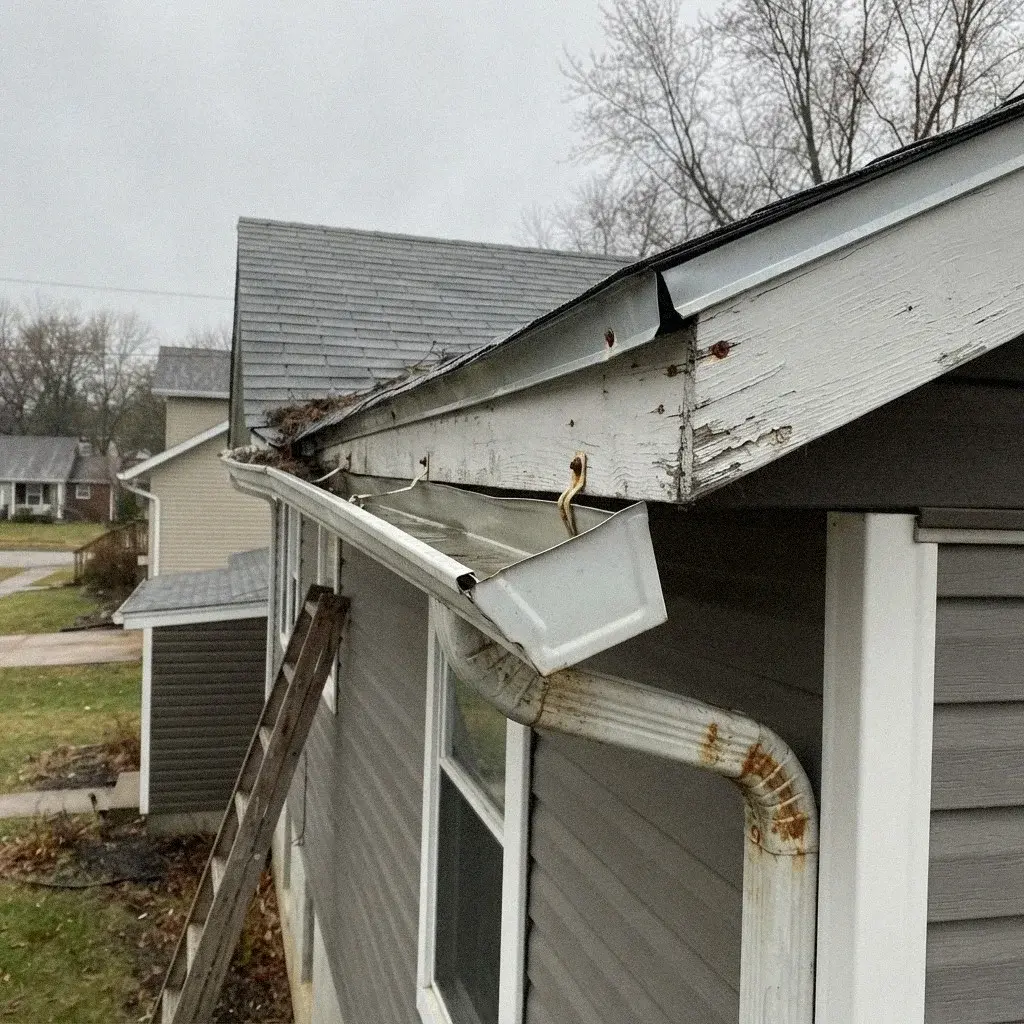
Before the long wet season settles over Bellevue, a roof benefits from a short walkaround done in the right order. This piece lays out what to clear, what to check, and when to book it.
Read article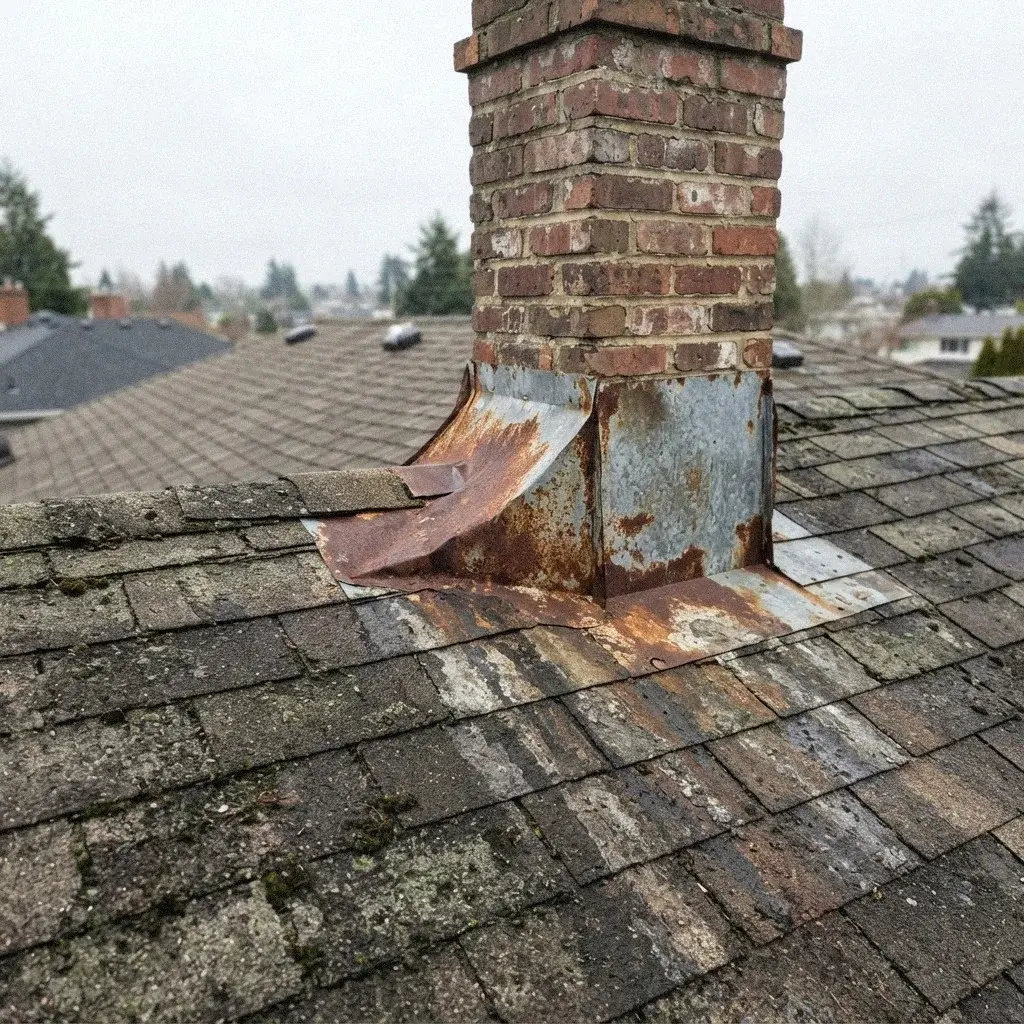
Most Bellevue roof leaks trace back to a short list of weak points rather than the shingles themselves. This is a ranked look at where water actually gets in, from valleys and pipe boots to sidewall flashing and exposed fasteners.
Read articleCost depends on roof size, pitch, material, and how much of the decking needs replacing once the old layer comes off. A composition shingle reroof is the most common quote; cedar shake conversions and steep hillside lots in Somerset or Lakemont run higher because of access and disposal. Get a written, itemized bid from a Bellevue-based crew, and confirm whether sales tax at the Bellevue rate is included or added on top.
Composition shingle in Bellevue typically wears out faster on shaded, north-facing slopes than on sun-exposed ones, because moss and prolonged dampness shorten its life. Homes under heavy conifer canopy in Bridle Trails or the Cougar Mountain and Lakemont area see edge lift and granule loss sooner than roofs in more open spots like Crossroads. Cedar shake ages differently and often gets converted to shingle once skip sheathing and ventilation become a maintenance headache.
A handful of lifted shingles, a cracked flashing at a valley, or a clogged gutter near Kelsey Creek Park is usually a repair. Widespread moss holding water against the surface, soft sheathing from trapped attic moisture, or multiple failed flashing points across the roof point toward replacement. A local pro who inspects the attic ventilation as well as the surface can tell you which side of that line your roof is on.
Response time in Bellevue varies by season more than by neighborhood. During the wet months from fall through spring, active leaks near the lakefront in Enatai or up on the Newport hillside tend to get looked at quickly since standing water and soaked sheathing are urgent. During the late spring through early fall reroof window, crews book out further because that's when most tear-offs happen, so scheduling ahead matters more than same-day urgency.
Not automatically. Bellevue's roofing policy says a recover job doesn't need a building permit unless the new material adds more than 5 percent to the roof's total weight, and a replacement doesn't need one if the repaired or replaced sheathing stays within five 4-by-8 sheets. Energy code rules can still apply even without a permit, and multi-unit buildings have their own separate requirements, so check your specific job rather than assuming either way.
Most Bellevue reroofs are planned maintenance the homeowner pays for directly, not an insurance claim, since this isn't a hail market where storm damage regularly triggers payouts. If a specific event like a fallen limb near Mercer Slough or wind damage does cause sudden harm, Washington's Office of the Insurance Commissioner sets timelines insurers must follow for acknowledging and deciding claims. Whether your situation qualifies depends on your policy language and the cause of the damage.
Washington doesn't issue a roofing-specific license, but contractors must register with the Department of Labor & Industries, carry an active bond, and hold liability insurance. Before hiring anyone working in Bellevue, from Wilburton to the Factoria area, look up their registration number on L&I's Verify a Contractor tool and confirm the bond and insurance are current and match the name on your bid. Registration confirms they're bonded and insured, not that the work will be good.
Bellevue has a real but short dry stretch, roughly late spring into early fall, with July typically the driest month, and that's when most tear-offs happen citywide. That means crews from Wilburton to the Lake Hills area book up well in advance during those months. Work can still happen in the wetter months when conditions allow, but scheduling gets tighter and weather delays are more likely between fall and spring.
Moss needs prolonged dampness, and Bellevue's long wet season combined with shade from overhanging Douglas fir, cedar, or hemlock gives it exactly that, especially on north-facing slopes in wooded neighborhoods like Bridle Trails and Somerset. Cutting back trees isn't a simple fix since Bellevue regulates tree removal and many hillside lots fall under critical areas rules. Regular moss removal and keeping gutters and valleys clear does more to protect the roof long-term than any one-time treatment.
Bellevue homes rarely lose a roof to one dramatic storm. Failure comes slower: months of overcast weather that never fully dry the shingles, moss creeping in under shaded sections, and small leaks at flashing or valleys that go unnoticed until a ceiling stain shows up. The pros we connect you with look for that slow damage, not just obvious wind or impact marks.
Bellevue roofs deal with a long wet season, mossy shade under conifer canopy, and a short dry-season window for getting work scheduled. That is a lot to weigh alone, whether you are near Bridle Trails, Somerset, or downtown. The licensed pros we connect you with look at the actual roof - moss lift, worn flashing, gutters that cannot keep up - and tell you plainly what it needs and when. No pressure to decide today, just a straight answer you can use to plan the rest of the season.
Call (425) 380-0932