Why Eastside Roofs See This
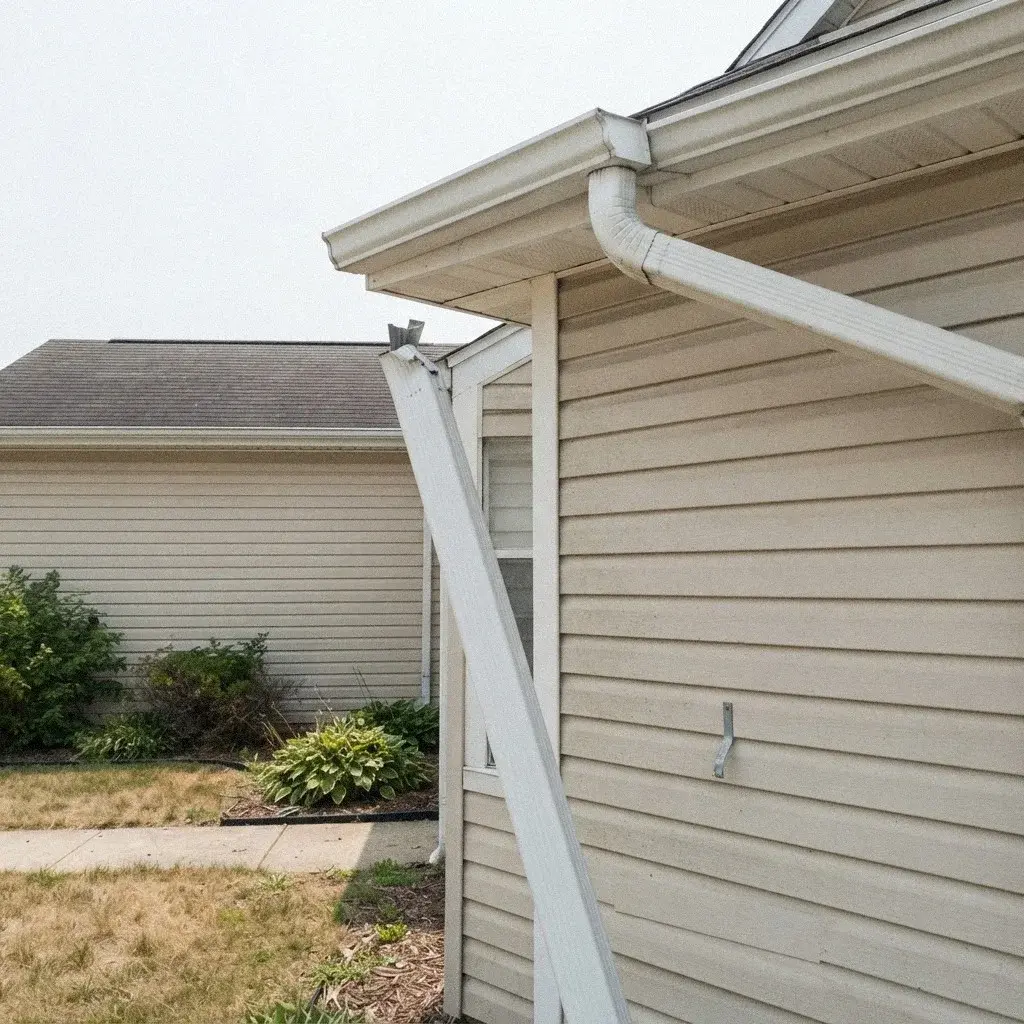
Clogged gutters send water over the fascia and back under the drip edge instead of off the roof, which is exactly what shows up on homes shaded by conifer canopy near Bridle Trails and Cougar Mountain. Bellevue's wet season gives debris months to compact before anyone notices.
A gutter packed with fir needles and cone litter holds water against the eave long after rain stops, which is common on wooded lots near Somerset and Lakemont. That standing water works under shingles and behind flashing rather than draining off the roof.
A roof in Bellevue rarely fails all at once. It fails one damp week at a time, as moss holds water at the edges and flashing slowly gives way. The pros we connect you with look past the shingles to the decking underneath, since that is where a quiet leak turns into a real repair bill.
The Key Points
- Location
- Overflow runs down the fascia and soffit at the eave, most visible at corners and behind downspouts where debris packs first.
- Appearance
- Standing debris, sagging troughs, and water sheeting over the front edge instead of down the downspout during rain.
- Cause
- Needle, cone, and leaf debris settling in the trough during Bellevue's long wet season, when nothing dries or blows clear.
- Progression
- Worsens through the wet season as trapped debris composts and holds moisture, straining fasteners and backing water up under the drip edge.
- Damage
- Ignored gutters overflow at the fascia, saturate soffit and roof edge, and push water back under shingles near the eave.
- Best Window
- Fall, once deciduous leaves have dropped, and late spring, once conifer cone drop slows, are the two practical windows for a full clean in Bellevue; homes under heavy fir or cedar cover often need a check mid-winter as well since needle drop there barely lets up.
- Roof Type
- an estimated $175–$500
Why It Gets More Expensive
Clogged gutters get confused with sealant failure at a valley or penetration, since both show water stains on the fascia or soffit after rain. The test is where the water shows up: a full gutter drips evenly along the eave, while a flashing or pipe boot failure stains one spot below a specific valley, hip, or pipe. Pull on a ladder or check from the ground after rain: if the gutter itself is visibly full or overflowing along its length, that is the clog. If the gutter runs clear but a stain still tracks from one fixed point on the roof down the wall, look at the flashing or sealant at that spot instead.
The Fix, in Order
Clearing the gutter and downspouts by hand or with a hose resolves an active clog, and checking that each run still pitches toward its downspout confirms the fix actually holds once debris is out.
Gutter guards reduce how fast debris rebuilds under heavy canopy, but they only hide a clog problem if the underlying run already sags or the downspout outlet is undersized for the roof it drains.
Wet-season damage tends to hide in the details: a valley that channels water where it shouldn't, a vent boot gone brittle, moss holding moisture against the surface longer than it should sit there. None of that shows from the ground. A closer inspection catches it while a repair is still cheaper than waiting for it to spread underneath.
Moss treatment or moss removal: what each one does
| Where you are now |
The usual recommendation |
|---|
| A leak rarely starts where the water shows up inside. Flashing, valleys, and the joints around anything that pokes through the roof are where wet-season water finds a way in, and gutters clogged with moss or debris just send more of it toward the edges. Tracing it back to the source is most of the actual work. | Most reroofs here start with moss lift, not storm damage. Once moss gets under a shingle edge it holds water against the surface and never lets it dry between rain spells. Left alone through a wet season, that damp edge curls, the granules wash thin, and a patch job turns into a full tear-off sooner than the shingle's age alone would suggest. |
| Getting a straight answer on roof condition shouldn't require guesswork. The licensed pros connected through this site look past the shingles at flashing, gutters, and attic ventilation to explain what's actually happening and what it would take to fix it, so a Bellevue homeowner can decide with real information instead of a sales pitch. | Roof problems here rarely announce themselves. Moss creeps under an edge, a valley holds water a season too long, a vent stays blocked through another wet stretch, and the deck underneath goes soft before anyone climbs up to look. A short visit from the licensed pros we connect you with turns that guesswork into a plain list: what is failing, what can wait, what cannot. |
| Roof problems in this region build slowly. Moisture works into flashing and valleys over many wet months before a ceiling stain gives it away. Waiting for a visible leak means the damage underneath is already older than it looks. Checking a roof before symptoms show costs far less than repairing what months of trapped water leave behind. | Flashing and valleys take the brunt of a long wet season, and they're usually the first thing to fail once sealant ages or metal shifts underneath shingles. The licensed pros in this area can check those spots, clear clogged gutters, and flag ventilation gaps before a small drip becomes a bigger repair bill. |
Where Ladder Work Turns Dangerous Fast
From the ground, a homeowner can watch a gutter during rain for overflow, check for visible sagging between hangers, and look for stains tracking down the siding below the eave. Getting on a ladder to scoop debris or inspect the drip edge and fascia up close is where this becomes work for the licensed pros.
How It Affects the Rooms Below
Left alone, a clogged gutter backs water up under the drip edge and shingle edge at the eave, which can reach the decking and substrate below and eventually soften the fascia or soffit. Near a valley or hip it can also back water toward flashing and sealant that was never meant to sit wet.
Curious What A Reroof Would Cost You?
Expect an estimated $175 to $500 for clogged gutters here, with the pitch, the access and how much decking is sound doing most of the moving. Rot and soft decking here come from trapped moisture and poor attic ventilation, not insects, so pest treatment rarely belongs in a Bellevue reroof estimate. If the licensed pros we connect you with find soft sheathing near Bridle Trails or Somerset's shaded lots, expect a conversation about ventilation and skip sheathing, not a pest bill. pricing guide, and the service that handles this is Gutter Cleaning & Gutter Guards.