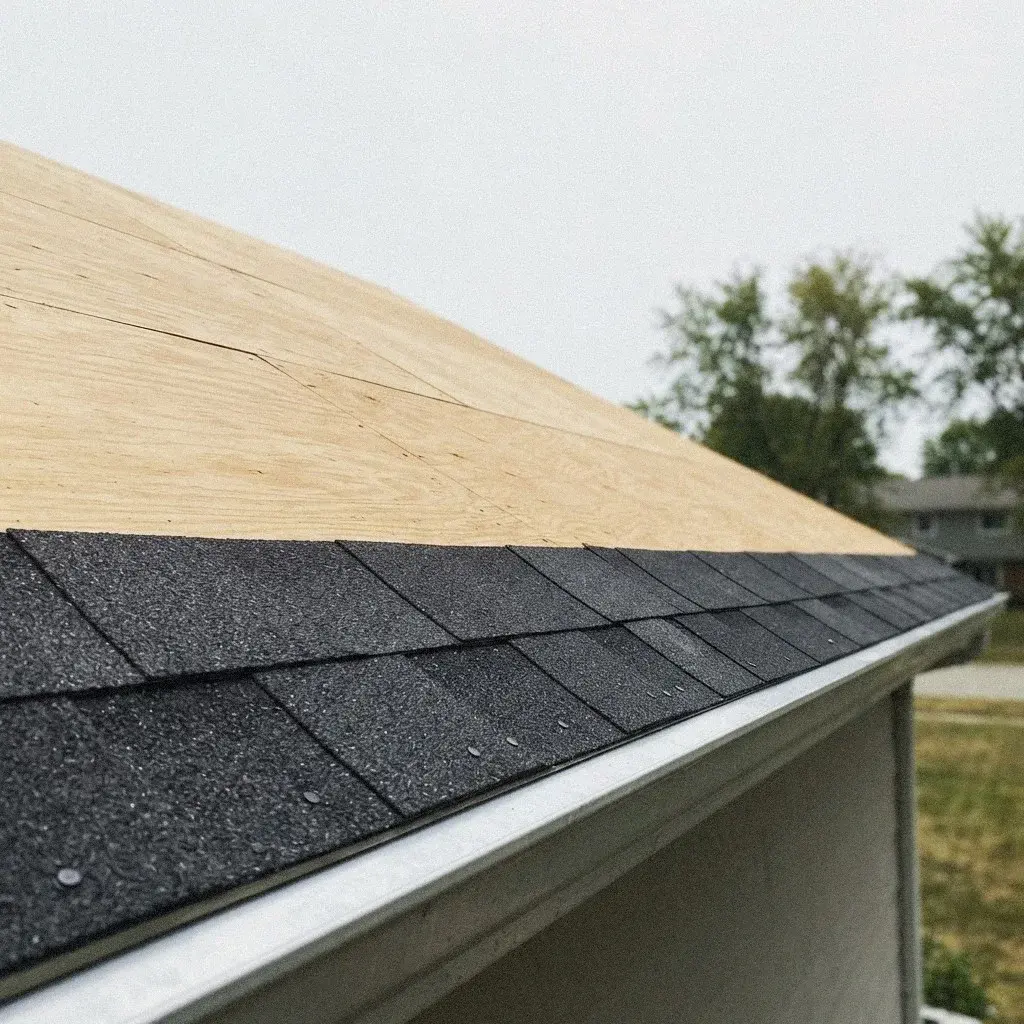
Laminated vs Three-Tab Shingles Compared
Architectural and three-tab shingles look similar from the curb but differ in layers, weight, and wind rating. Here is what separates them before you talk to a roofer in Bellevue.
Read article
Full tear-off, yard protection, and a straight scope from the licensed local pros we connect you with.
Roof replacement Bellevue, WA means the old roof comes off down to the deck and a new system goes on. It is the right call when roofing replacement makes more sense than another patch.
Call (425) 380-0932 and we'll connect you with a licensed local pro. Book before the next storm.
Residential roof replacement means the entire roof covering comes off your house and a new one goes on, from bare decking up.
The licensed pros we connect you with strip every layer, check the sheathing, then build the new system in order. Age alone can be the sign: on older roofs in Bridle Trails or Somerset, the underlayment is often worn out even when the shingles look fine.
Not sure if you need a repair or a full replacement? A roof inspection will tell you.
A composition shingle install starts with new underlayment, ice and water shield at the eaves and valleys, drip edge, and a starter course before the field shingles go down.
Ridge cap finishes the top, and valley metal covers the low points. It is a full system, not a patch.
Switching from cedar shake is common on older Bellevue homes. Shake often sits on skip sheathing, so solid decking goes down first and attic ventilation may need adjusting.
Roof replacement cost depends on your roof's square footage, how complex the roof is, and how much sheathing needs repair.
Check the pricing guide for current prices, then call (425) 380-0932 to get a straight scope.
A reroof here means a full tear-off: every layer comes off down to the deck, not a cover-over.
Once two layers of shingles are already on, a third is not permitted, so a full tear-off is required.
Most tear-offs and reroofs take one to three days. The pros watch the forecast and won't start if rain is expected before the underlayment and shingles are down, so book in the dry months, roughly June through September.
For a school roof replacement, call (425) 380-0932 and we'll connect you with a licensed local pro.
The steps match any other job: inspect the roof, protect the property, tear off, rebuild in sequence, then sweep for nails and walk the site.
Ask for the contractor's registration number and check it with L&I before you sign. For flat sections, see flat and low-slope roofing.
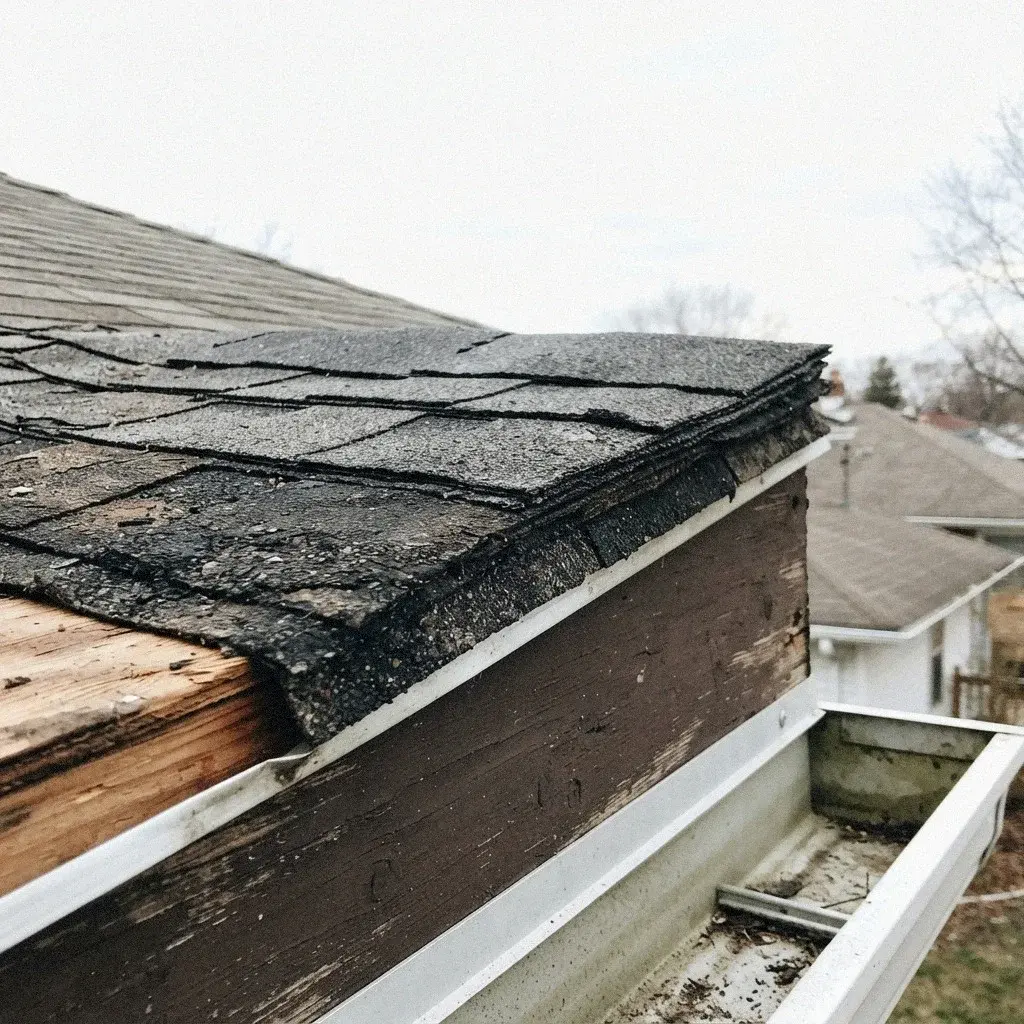
Years of wetting and moss lift wear out the underlayment even when the shingles look fine from the ground. Waiting for a leak often means the sheathing is already damaged.
Two or more layers of shingles point toward a full tear-off instead of another repair.
Moss lifting shingles across the roof means the whole system is failing, not one spot.
Flashing that has been patched more than once says another repair visit will not hold.
The pros inspect the roof, count existing layers, check the decking, and confirm square footage before writing the scope.
Dumpster placement and tarps or plywood over anything near the drip line go in first. Then the old roof comes off to the deck.
Sheathing is repaired where needed. Then ice and water shield, underlayment, drip edge, starter course, shingles, valley metal, and ridge cap go on in order.
A magnetic sweep clears stray nails from the yard and driveway, ventilation gets checked, and the pro walks the property with you.
Older Bellevue homes with skip sheathing under cedar shake, or attic ventilation sized for a different covering, need the replacement to account for what is underneath. A reroof over poor decking or blocked soffit venting fails again within a few wet seasons, no matter how good the new shingles are.
Bellevue exempts a roof replacement from a building permit if repaired or replaced sheathing stays within five 4-by-8 sheets; past that, a permit is required. Energy code rules on insulation can still apply. The registered contractor typically pulls any permit through MyBuildingPermit.com.
Washington allows removing roofing down to the deck, and a full tear-off is required once two layers of shingles are present, since a third layer is not permitted. Washington has no roofing-specific trade license, so check that your contractor is registered with active bond and liability insurance through the L&I contractor lookup before you sign.
Here is roughly what roof replacement runs locally. Treat it as a guide — the property itself decides where inside the range you land.
| L&I Registration | Bond and Insurance | Lien Releases |
|---|---|---|
| Licensed here means registered with the state, bonded, and carrying liability insurance. That status is checkable before anyone sets foot on the roof, and it matters more than a friendly sales pitch or a truck with a logo on it. | Moss removal, gutter clearing, minor flashing fixes; no tear-off or decking work | an estimated $7700–$28500 |
| Insurance protects you two ways: it covers damage if something goes wrong during the job, and it keeps an injured worker's medical bills off your homeowner's policy. Ask to see current proof, not just a claim that coverage exists somewhere. | Full tear-off, new decking sections, flashing, ridge vent; hauling not always included | an estimated $11000–$39000 |
| A bond is not the same as insurance. It's a smaller financial backstop meant to cover unfinished or defective work. Confirming both bond and insurance status takes a few minutes and avoids a much longer cleanup later. | Full reroof with tear-off, valley and flashing replacement, moss-resistant finish | an estimated $14300–$54000 |
| Unlicensed work can still look competent on the surface, until a warranty claim has nowhere to go or a lien shows up after you thought the job was paid for and finished. Verification exists precisely because appearance and standing aren't the same thing. | Full tear-off, disposal, new flashing and valleys, permit handling if required | an estimated $19800–$78000 |
Get lien releases from the general contractor and every subcontractor or supplier before final payment. Paying the main contractor in full does not stop an unpaid supplier from placing a claim against your home afterward.
Most Bellevue tear-offs and reroofs take one to three days, depending on square footage and roof complexity. A simple ranch near Crossroads may finish in a day, while a steep roof with many valleys near Bridle Trails or Somerset can run longer. The pros won't start a tear-off if rain is expected before the underlayment and shingles are down.
Yes. The pros we connect you with lay tarps or plywood along foundation lines, garden beds, and walkways before work starts. A dumpster takes the debris, and a magnetic sweep afterward picks up stray nails so pets, bare feet, and tires stay safe.
Not always. Bellevue does not require a building permit for a residential roof replacement if repaired or replaced sheathing stays within five 4-by-8 sheets, but beyond that a permit is required. Energy code requirements can still apply, and your contractor should tell you which side of the line your roof falls on.
Yes, and it is a common job on Bellevue's older homes, especially those from the 1950s through 1980s. Cedar shake often sits on skip sheathing, so solid decking usually goes down first. Attic ventilation may also need adjusting, since shake and shingle breathe differently.
As a guide, roof replacement here works out at an estimated $11000–$30000 per job. A simple gable roof with good access sits at the bottom; a steep, cut-up roof with several dormers sits at the top. Nothing is charged until you have approved a written estimate.
A roof rarely fails all at once here. It fails one wet season at a time, as moss lifts an edge, a valley slows down, and a flashing seam finally gives. The pros we connect you with check those specific spots first, because in Bellevue that's where the actual damage starts, not the shingle field.

Architectural and three-tab shingles look similar from the curb but differ in layers, weight, and wind rating. Here is what separates them before you talk to a roofer in Bellevue.
Read article
Cedar shake asks more of an owner than composition shingle does. Here's what cupping, splitting, checking, and spaced sheathing actually mean for a Bellevue roof, and when repair stops being the right call.
Read article
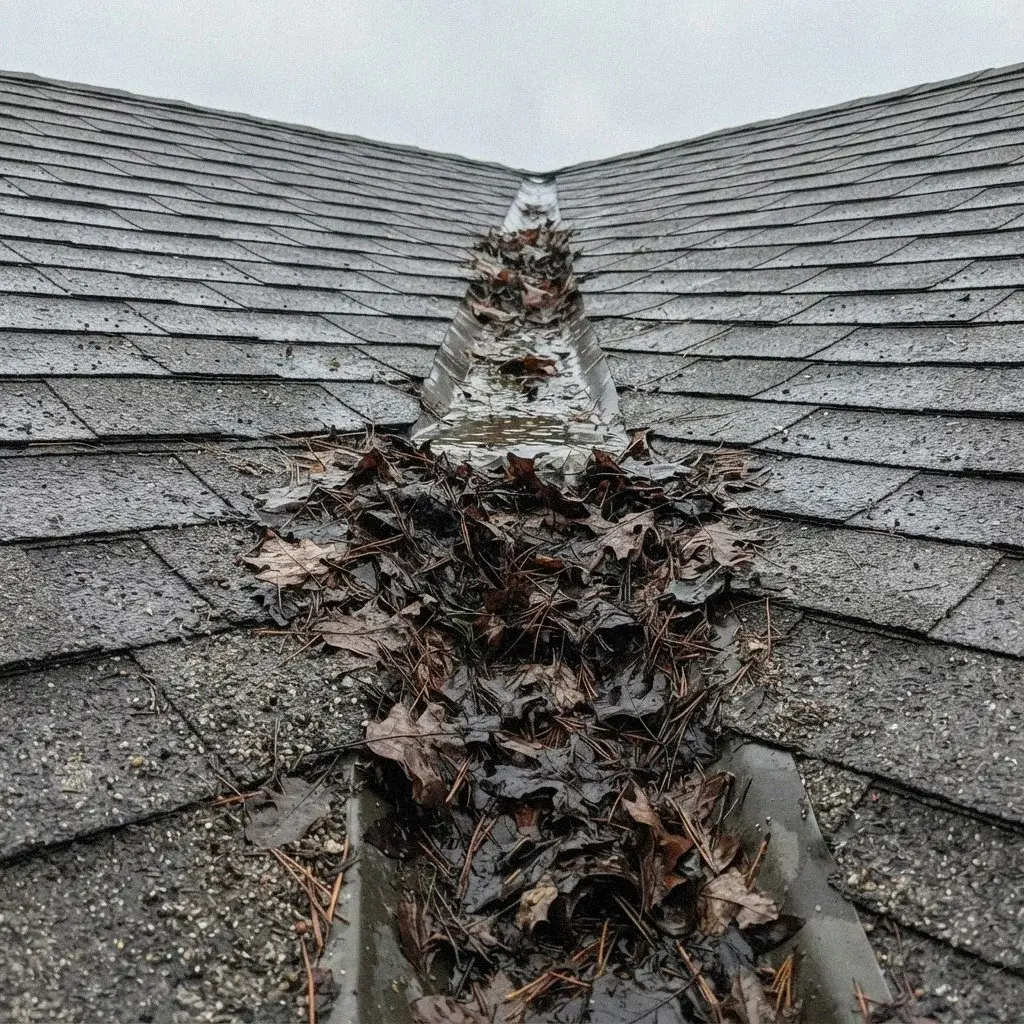
Douglas fir and cedar canopy over so many Bellevue lots means needles, cones, and twig litter build up in valleys and gutter troughs year-round. Left alone, that debris holds water against the roof deck. Here is where it collects, what it does, and how to remove it without damaging shingles.
Read articleReading about this service is a fine start, but every Bellevue roof wears differently depending on shade, pitch, and age. The details on this page describe what the work generally involves; they cannot tell you whether your roof needs it right now. The licensed pros we connect you with can look at the actual conditions - moss, flashing, gutter runoff - and tell you honestly whether this is the right job or something else is the real problem first.
Call (425) 380-0932