Apartments & Multifamily
Multifamily Roofing
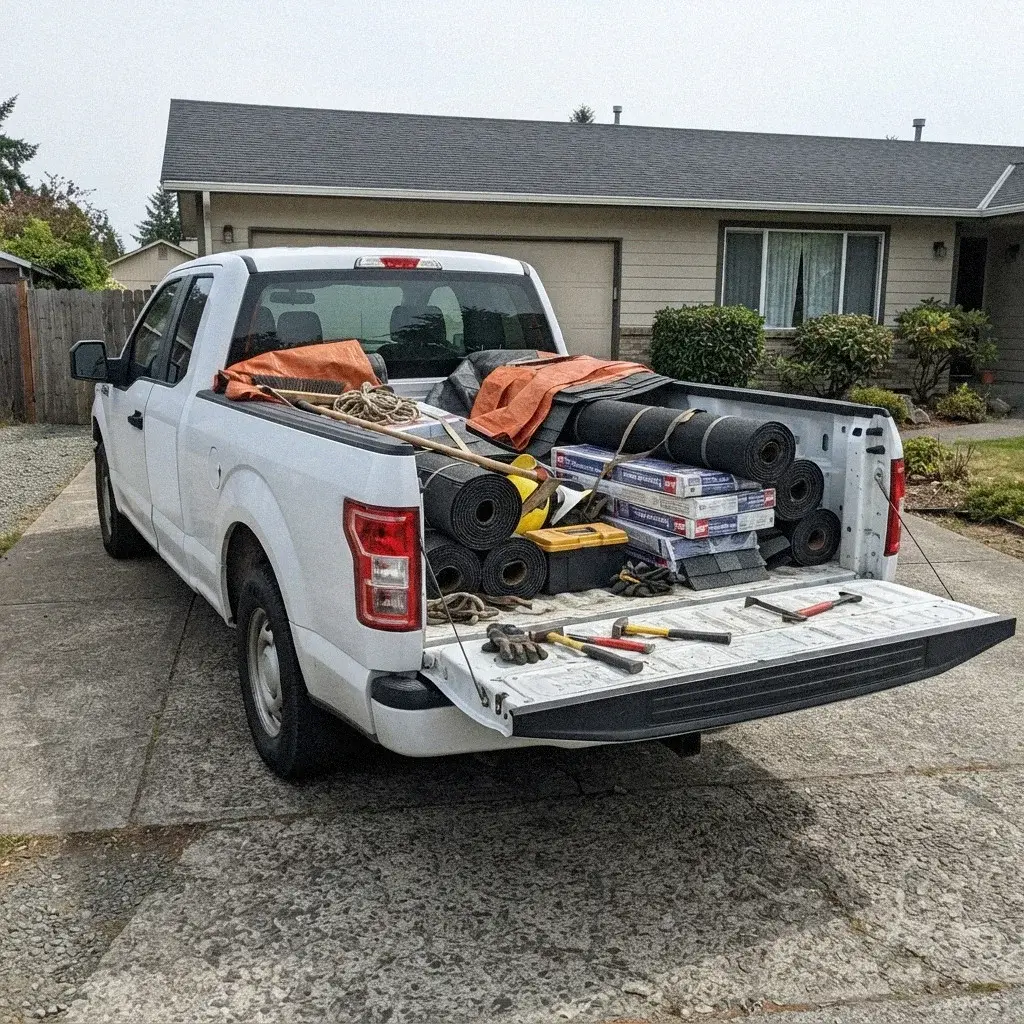
Roof work Bellevue boards can review, phase, and fund without guessing at the cost.
In most Bellevue condominiums the roof is a common element, and the association funds its repair or replacement through reserves or a special assessment, not the individual unit owner, though the governing documents control the exact split.
A condo or HOA roof in Bellevue is not one owner's decision. Under Washington law the roof is usually a common element, sometimes a limited common element tied to specific units, and the association is the party responsible for maintaining, repairing, and replacing it. That responsibility is funded by every owner through assessments, not by whoever happens to live under the leaking section. Whether a given roof counts as common or limited common depends on the governing documents, and boards near Bellevue Way or out toward Wilburton read those documents before they read any bid.
Which statute applies depends on when the community was created. Newer associations generally fall under the Washington Uniform Common Interest Ownership Act, while many older Bellevue condominiums still operate under the earlier Washington Condominium Act, and both set the same basic rule: the association handles the common elements, the unit owner handles the unit. A board that has not confirmed which act governs its declaration is guessing at its own authority, and guessing is a bad place to start when a roof over Northeast Bellevue or the Wilburton corridor is already failing.
None of that legal framing changes what a wet roof does to a building. Water finds flashing, valleys, and penetrations first, and in a multi-building association near Crossroads or Lake Hills, one bad valley can affect several units under one roof plane before anyone below notices a stain. The pros we connect you with document damage by building and by unit so the board can match what the reserve study assumed against what the roof actually needs, instead of reacting unit by unit as complaints come in.
Boards do not authorize roof work the way a single homeowner does. A written scope of work has to survive an owner meeting, get compared against other bids on the same terms, and often get board approval before a contract is signed, all while owners who never touch the roof still want to understand what they are paying for. A scope written for one engineer is useless to a board of seven volunteers, so the document has to describe materials, sequence, and building-by-building phasing in language any owner can follow.
Bid comparison only works when every bidder priced the same scope of work, on the same roof areas, with the same assumptions about sheathing condition. Boards near Bellevue Square or the Factoria corridor have been burned by bids that looked close on price but covered different work, and the gap only showed up as a change order mid-project. A scope tied to a documented roof asset condition report, not a verbal walk-through, is what lets a board compare bids honestly and defend that comparison at the next owner meeting.
| Item | What Boards Want | Condo/HOA Roof |
|---|---|---|
| Who approves it | Board, per governing documents | Individual owner |
| How it's funded | Reserves or special assessment | Owner's own funds |
| Scope document | One scope, multiple bidders | Single contractor estimate |
| Timing driver | Reserve study, phasing plan | Owner's own timeline |
| Who owners must inform | Whole membership, at owner meeting | No board notice needed |
| Governed by | Declaration, bylaws, reserve study | Board votes, all owners funded |
| Owner communication | One point of contact for the board | Dozens of unit owners calling separately |
| Phasing options | Buildings scheduled to match reserve funding | Whole property or nothing |
Reserve funding is supposed to make a roof replacement a planned expense rather than an emergency, but a reserve study built five years ago in Somerset or Bridle Trails does not know what this winter's rain did to the flashing. When the real condition outpaces the reserve number, the board is choosing between a special assessment, a loan, or deferring work on a roof that is already letting water into common hallways or garage levels below.
Special assessment sequencing matters as much as the assessment itself. Owners near Downtown Park or Meydenbauer Bay want to know not just what they owe but when, and whether the work can be staged so the bill and the disruption land in phases instead of all at once. A maintenance agreement that spells out timing gives the board something firmer than a promise to point to when an owner asks why building three is getting a new roof before building one.
Phasing across buildings is also how an association matches work to money it actually has. An HOA with three or four roof sections near Crossroads Park does not have to reroof all of them the same season if the reserve or the special assessment cannot cover it. The pros we connect you with can sequence buildings so the ones showing the worst moss lift, the worst valley wear, or the clearest sign of water intrusion get addressed first, while later phases wait for the next funding cycle.
Downtime on a condo roof is not downtime for a business, but it is disruption for people living underneath scaffolding and tear-off debris for weeks. An association near Wilburton or the Bel-Red corridor has to warn owners about parking changes, noise windows, and access to limited common elements like balconies or patios that sit directly under the work.
Because so many Bellevue condo buildings share flat or low-slope sections alongside pitched roofs, a phasing plan often has to treat those areas differently. A torch-down or single-ply membrane section over a garage or amenity space fails in different ways than a shingle-covered residential wing, and a board reviewing bids needs the scope to say plainly which material goes where and why, not lump the whole building under one line item.
A roof asset condition report gives a board something a hallway conversation cannot: a documented baseline of what shape each building's roof is actually in, building by building, ahead of the next reserve study update. That report is what lets a management company defend a proposed special assessment to owners who were not on the roof and have no way to verify the claim themselves.
It also protects the board later. If an owner disputes why the association spent reserve funds on one building before another, a condition report tied to dated photos and a written scope answers that question without relying on anyone's memory of a walk-through from eighteen months ago near Northeast Bellevue or the Eastgate area.
Getting a bid comparison and a phasing plan in front of a board takes a scope document that already reflects real roof conditions, not a generic estimate. The pros we connect you with can inspect a Bellevue association's buildings, put findings in writing an owner meeting can actually use, and price phased work against what the reserve and any planned special assessment can support.
Whether the property sits near Meydenbauer Bay, out toward Somerset, or along the Bel-Red corridor, the process starts the same way: confirm what the governing documents call common versus limited common, get a written scope tied to documented conditions, and compare bids against that scope before the board votes on anything.
Phasing makes sense when a Bellevue association covers several buildings and the reserve study cannot fund all their roofs at once. A written scope of work should break the job into building groups, tying each phase to a funding source rather than an arbitrary calendar. Boards near Bridle Trails and Somerset have used this approach to spread a special assessment across two seasons instead of one, keeping owner meetings focused on sequence rather than re-litigating whether the work is needed.
Attic ventilation gets overlooked until sheathing turns soft, usually from trapped humidity rather than a leak anyone could see from outside. A bathroom vent dumping into the attic or a blocked soffit intake can do quiet damage for years. Anyone quoting a roof replacement should be checking this, not just the shingles.Kenmore, Bothell and Lake Hills. Roofs in Bellevue wear out from repeated wetting more than any single storm. Moss holds moisture against shingles, flashing loosens at valleys and penetrations, and gutters clogged with needles back water up under the edge. The licensed pros we connect you with check those failure points first, because that's where a Bellevue roof actually gives out.
A roof rarely fails all at once here. It fails slowly, through moss holding water against shingles, flashing that gives out at a valley, or gutters that back up during the wet season and let water find a seam. The licensed pros we connect you with look for those specific signs before they become soft decking or a bigger repair.Cost depends on what a roof actually needs, and that only shows up close up. A read on shingle condition near Bellevue Way or a shaded lot by Bridle Trails still means someone climbing the ladder. The licensed pros we connect you with can price a tear-off, a moss-heavy reroof, or a cedar-to-composition conversion once they've seen the deck itself, not a photo of it. pricing guide, and the commercial overview covers how a scheduled program works.
Multifamily Roofing
Commercial Roofing
In most Bellevue condominiums the roof is a common element, so the association is responsible for maintaining, repairing, and replacing it through assessments, not the individual unit owner. Whether an older building near Crossroads or a newer one near Wilburton falls under the state condominium act or the newer common ownership act depends on when it was created, so the board should confirm this against its own declaration.
The declaration and bylaws decide this, not a state form. They define what counts as a common element versus a limited common element, which controls whether roof work is paid from regular assessments, reserves, or a special assessment. Boards in Somerset and Newport HOAs should read their governing documents before assuming the association's default responsibility applies the same way to every building on the property.
A reserve study estimates when major components like the roof will need work and how much the association should be setting aside now. If a Bellevue association near Lake Hills has underfunded reserves, a special assessment becomes the way to cover a roof project without waiting years, and the board typically sequences that assessment alongside a phasing plan so owners aren't hit with the full cost at once.
Bring the association's written scope of work and ask each bidder to price against the same document rather than their own version of the job. A bid comparison only works when the scope specifies material, tear-off extent, and phasing the same way for every contractor. Boards near Factoria and Wilburton have found that mismatched scopes are why bids on the same roof can look wildly different.
Bring your board a written scope of work and a phasing plan the licensed pros we connect you with can price against.
Call (425) 380-0932