Bellevue's wet season runs long, roughly October into May, and once it starts there is little dry weather to work in. The window to look a roof over sits in late summer, after the driest stretch and before the first sustained rain arrives. Homes near Cougar Mountain and Bridle Trails, under heavy fir and cedar canopy, tend to need this looked at earlier than open lots near Meydenbauer Bay, simply because there is more debris coming down.
Start With Gutter Clearing
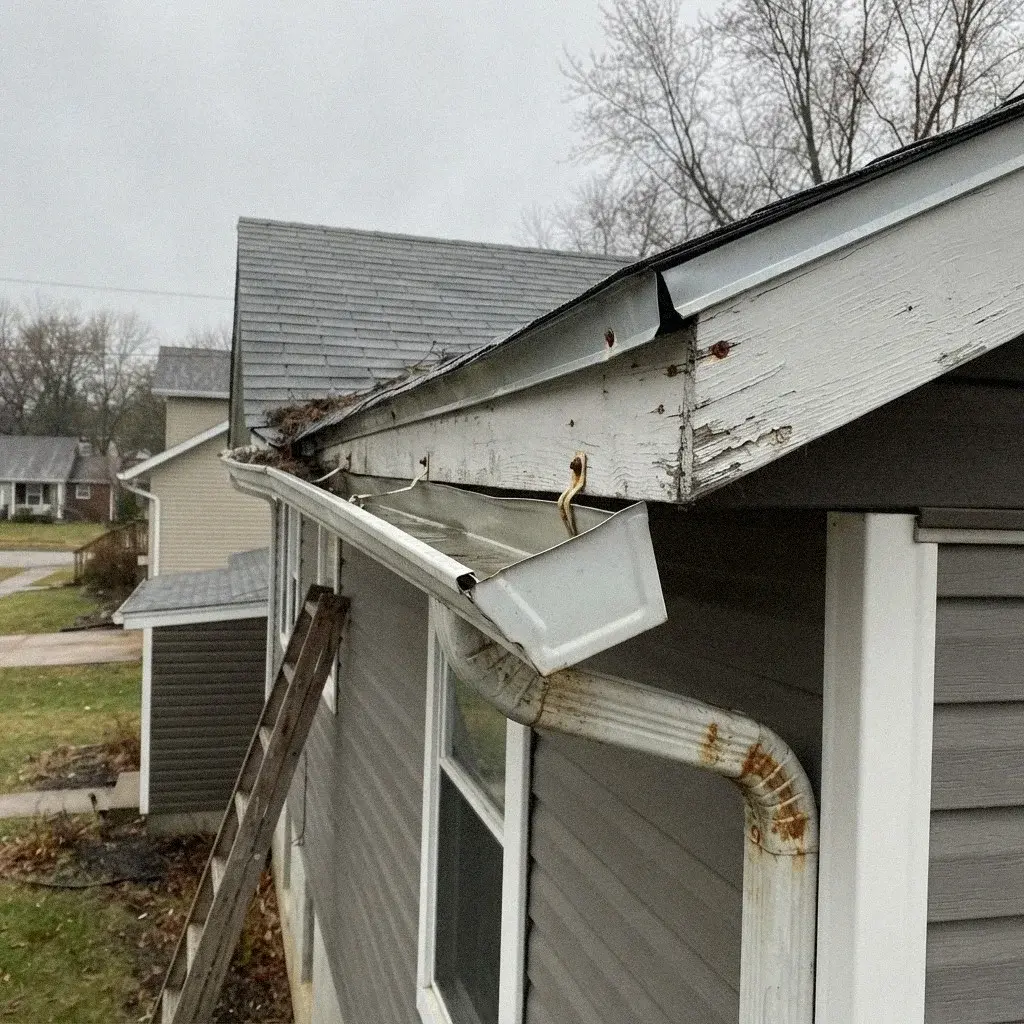
Gutter clearing comes first because everything downstream depends on it. Needles and cone debris from conifer cover build up fast on shaded lots, and a gutter packed with debris backs water up under the shingle edge instead of shedding it. Clearing by hand or with a hose, working end to end toward each downspout, is the basic move. Skipping this step and moving on to flashing or attic checks first just means redoing the walkaround later.
Check Downspout Flow Next
Once gutters are clear, run water through each downspout to confirm it exits freely at the bottom rather than backing up partway. A downspout that empties slowly usually has debris lodged at a bend or elbow. On sloped lots common around Somerset and Newport Hills, confirm the water is landing on a splash block or extension that carries it away from the foundation, since roof water shed against a slope can saturate soil quickly.
Clear Valley Debris By Hand
Valleys collect more debris than open roof plane because two slopes drain into one channel. Needles and small branches mat down there and hold moisture against the shingle longer than anywhere else on the roof. Clearing valley debris by hand, carefully and without standing directly in the valley, matters most on homes with multiple gables or cut-up rooflines, common in newer construction around Lake Hills and Factoria.
Walk Every Roof Plane
A roof plane walkaround means looking across every slope, not just the front elevation visible from the street. Look for lifted or curling shingle edges, patches of moss holding water against the surface, and any soft or discolored area that suggests trapped moisture underneath. Binoculars from the ground work for a first pass; anything that looks questionable is worth a closer look before assuming it is fine through another wet season.
Inspect Flashing And Pipe Boots
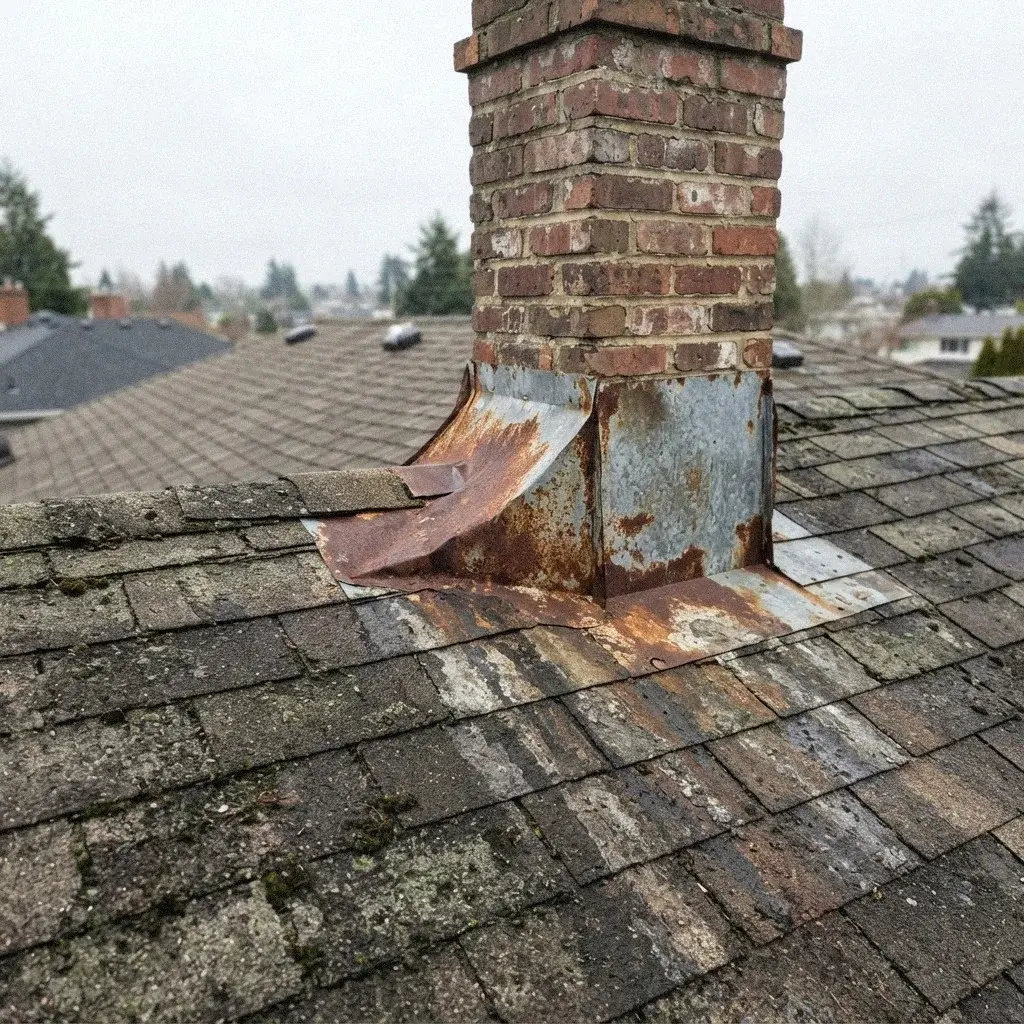
A flashing check covers the metal at chimneys, skylights, and roof-to-wall joints, looking for lifted edges, cracked sealant, or gaps where water could work its way underneath. Pipe boots, the rubber collars around plumbing vents, dry out and crack over years of exposure and are a common source of slow leaks. Both are small details, but they are where sustained rain finds its way in first.
Do A Sealant Check
A sealant check means looking at every spot where a fastener, vent, or fixture penetrates the roof surface. Sealant shrinks and cracks over time, especially where it sits exposed to repeated wetting and drying through a Bellevue winter. Any bead that looks chalky, split, or pulled away from the surface it was meant to seal is worth noting on a punch list rather than assumed to still be holding.
Look Inside At The Attic
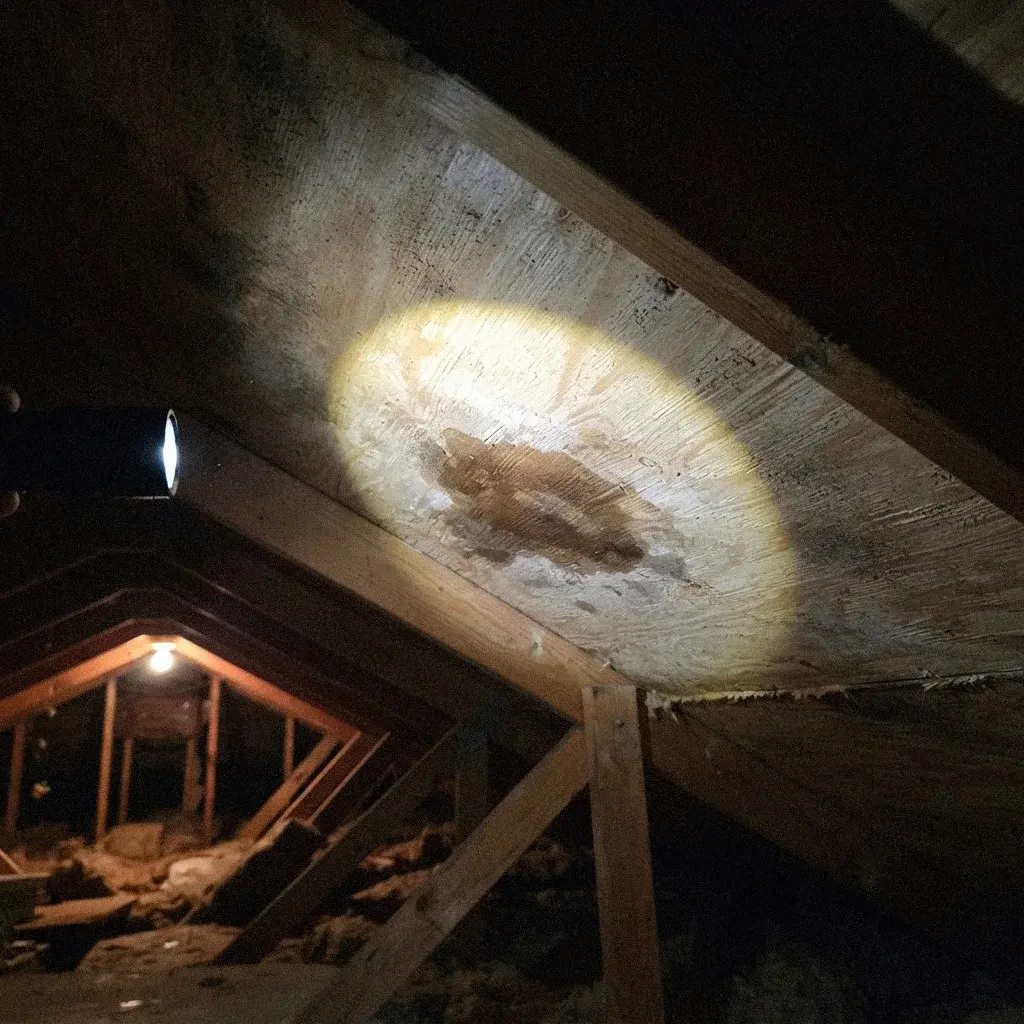
Before scheduling, walk the roof plane from the ground and note anything that looks off: lifted shingle edges, moss ridges along the valley debris line, or a pipe boot that has pulled away at the seal. Check the attic for damp rafters near the flashing. Clear gutters and downspout flow paths so runoff reaches the splash block instead of pooling against the Bellevue home's foundation grade. Write down what you find as a punch list for whoever you book.
Confirm Grade Drainage Nearby
Grade drainage around the foundation matters alongside the roof itself, since the two systems work together to move water away from the house. Walk the perimeter after clearing gutters and confirm soil slopes away from the foundation rather than toward it, especially on hillside lots near Lakemont or Coal Creek Parkway where runoff naturally wants to pool against a downhill wall.
Build A Short Punch List
After the walkaround, write down what needs attention in the order it was found: gutter sections still holding debris, a valley that needs a second pass, flashing that looked lifted, an attic spot to watch. A punch list turns a vague impression of the roof into a short, specific set of items, and it is the difference between fixing something in September and discovering it mid-storm in December.
Pick A Scheduling Window
The practical scheduling window for getting any of this addressed sits before the wet season takes hold, since crews serving Bellevue and nearby Redmond and Kirkland book up during the short dry stretch every summer. Calling in June for a September slot is normal in this market. Waiting until the first heavy rain to call means competing with every other homeowner who waited too.
When To Call It In
Most of this walkaround is within reach for a homeowner comfortable on a ladder, but anything involving standing on the roof surface itself, working near a steep pitch, or a valley that looks soft rather than just dirty is worth having a second set of eyes on. The licensed pros we connect you with can run this same sequence and flag anything the ground-level view missed before the rain arrives.
Dealing with this in your home?
Bellevue roofs age on their own schedule. Wooded lots near Bridle Trails and Somerset stay shaded long after storms pass, and conifer cover keeps surfaces from ever fully drying between fronts. Add a reroof window that tightens once summer ends, and small maintenance calls turn urgent fast. The sections below sort out timing, materials, and who actually answers for the work overhead.