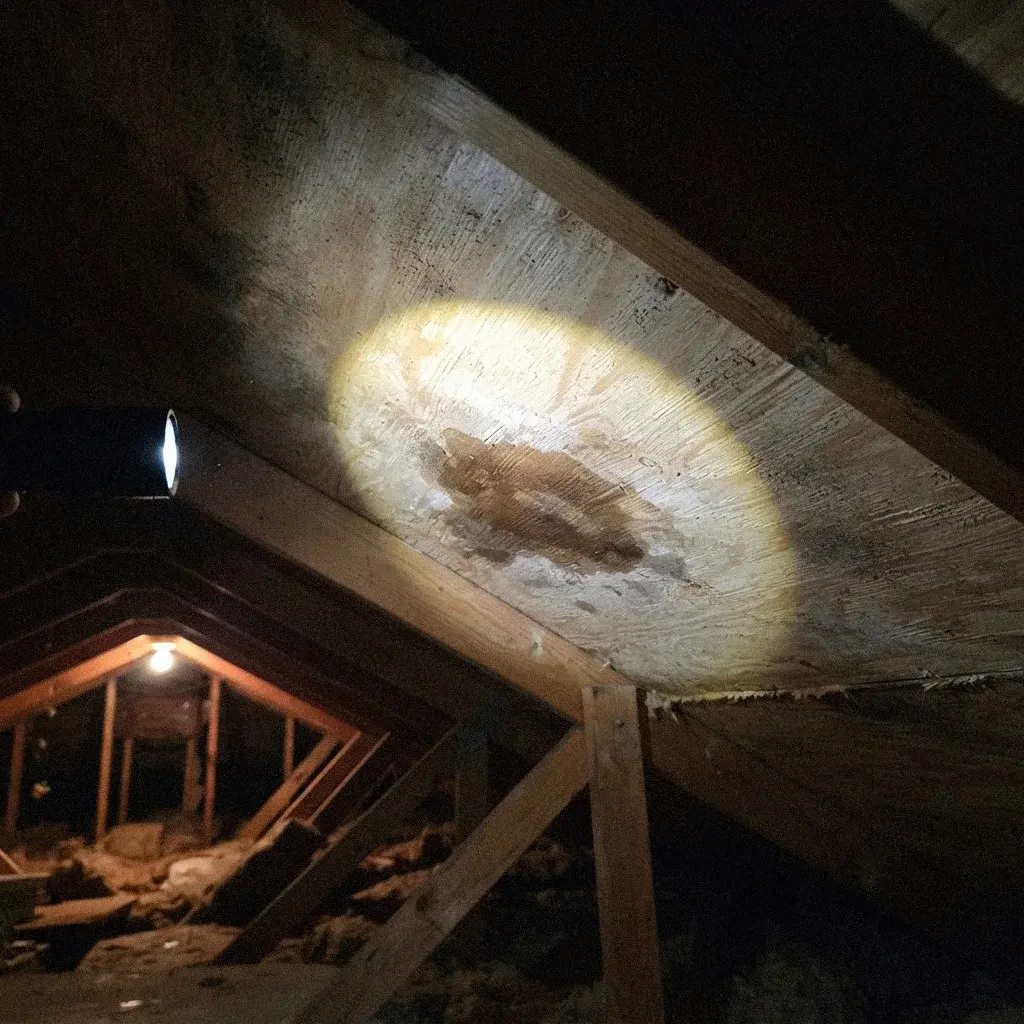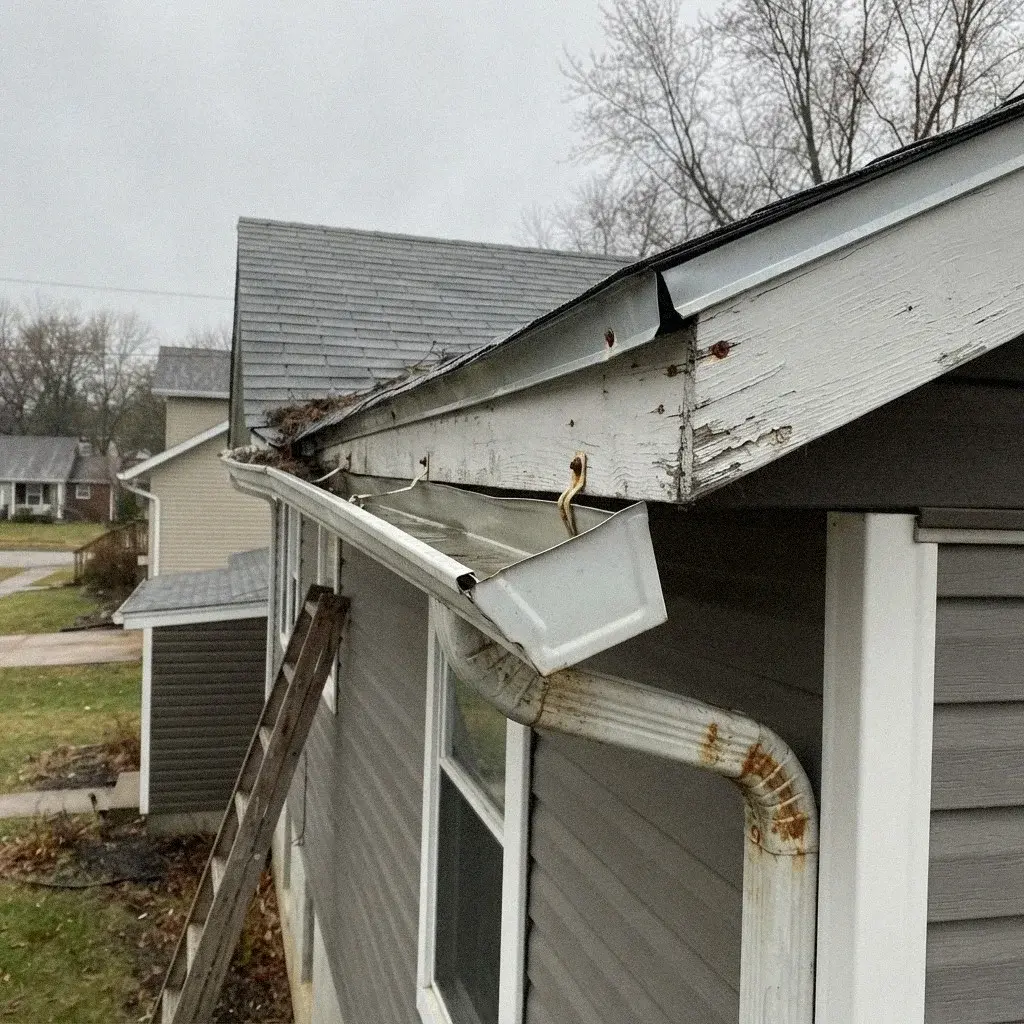
A roof leak in Bellevue almost never starts in the middle of an open shingle field. It starts where the roof plane meets something else — a pipe, a wall, another roof plane, a chimney. Those joints are where two different materials have to be sealed together, and every seal is a place that can fail over years of wet-season cycling. Understanding which joints fail most often, and why, matters more than knowing what a healthy shingle looks like, because that's where the water is actually getting past.
Pipe Boots and Vent Penetrations
Plumbing vent stacks and other roof penetrations use a pipe boot, a rubber or plastic collar fitted around the pipe and nailed to the deck under the surrounding shingles. That rubber is exposed to sun and weather more than almost anything else on the roof, and it cracks and splits well before the shingles around it wear out. On a lot of Bellevue homes, a cracked pipe boot is the single most common source of a slow ceiling stain nobody notices for months.
Valleys Where Two Slopes Meet
Valleys carry runoff from two roof planes into one channel, so a Bellevue roof with several intersecting gables often loses its worst leak point there rather than at any single flat stretch. Debris, moss, and needles collect in that channel and hold moisture against the underlayment. Once the metal or shingle lining corrodes or the joint opens, water tracks sideways under the field shingles well past the visible gap, showing up over the Wilburton light rail station area or any home with a cut-up roofline near Somerset.
Headwall and Sidewall Flashing
Where a roof slope runs into a wall, headwall flashing sits at the top edge facing the water flow, and sidewall flashing runs along the side. Step flashing, a series of small overlapping metal pieces, is supposed to be woven in with each course of shingles along a sidewall. When a crew installs one long strip instead of individual step pieces, water finds the gap at the next heavy rain. This is a common failure point on additions and dormers around Bellevue's older neighborhoods.
Chimney Counterflashing Gaps
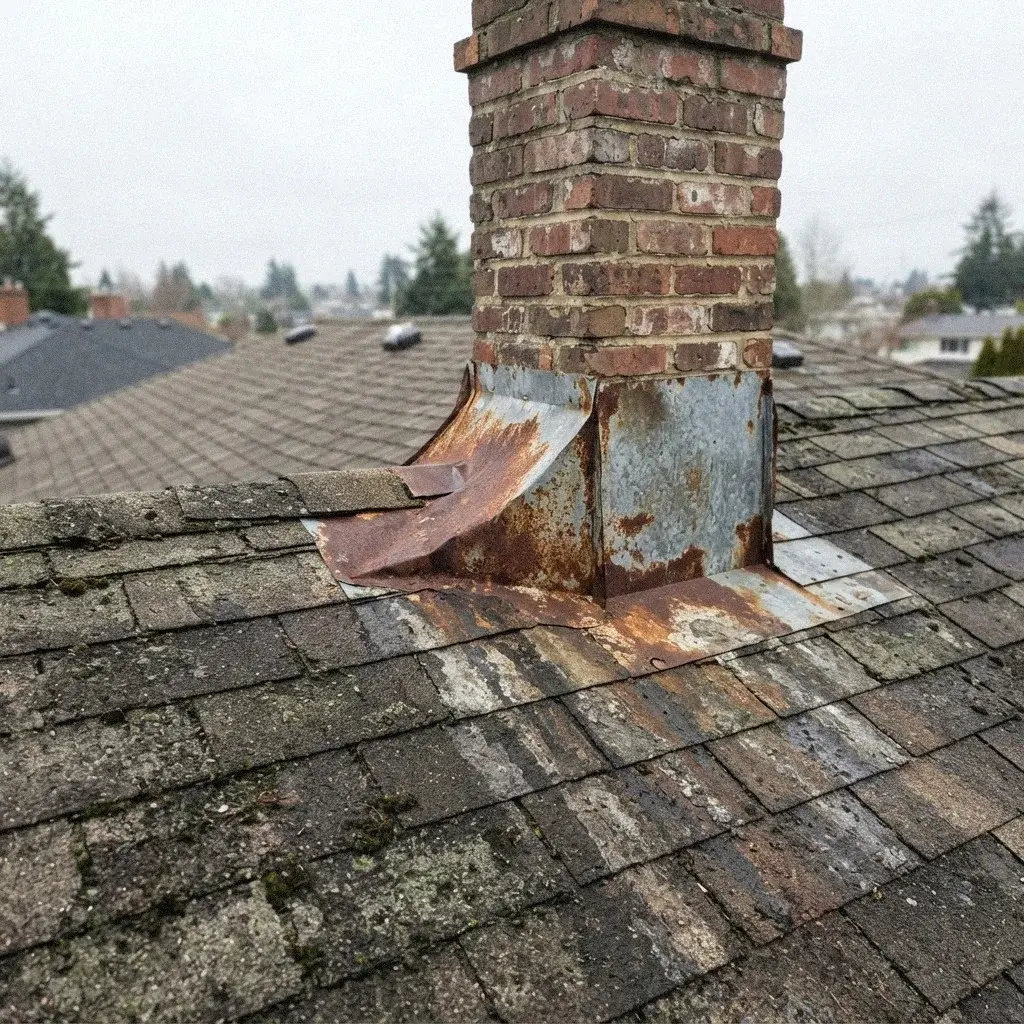
A chimney needs two layers of flashing: base flashing against the roof deck and counterflashing that's embedded into the masonry above it, overlapping the base flashing like a shingle. Masonry moves slightly with seasonal wetting and with the region's seismic ground motion, and mortar joints holding counterflashing can loosen over time. Once that top layer pulls away even slightly, wind-driven rain gets behind it, and the leak shows up nowhere near the chimney itself, which makes it harder to trace.
Skylight Curb Seals
A skylight sits on a raised curb, and the flashing kit around that curb is built for the specific roof pitch and skylight model it was installed with. Sealant at the corners of the curb, rather than the glass itself, is usually where an aging skylight starts to leak. Homes around Bellevue with skylights installed decades ago, before curb flashing kits were as standardized as they are now, tend to see this more, particularly after a run of wet, overcast weeks with no drying time between storms.
Kick-Out Flashing at Roof Ends
Kick-out flashing is the small piece that diverts water away from a wall at the bottom end of a sidewall flashing run, sending it into the gutter instead of behind the siding. When it's missing or too short, water runs down the wall face instead of off the roof, and the damage shows up as staining or rot at the base of the wall rather than as a ceiling leak. It's an easy thing to skip during a reroof, and an easy thing to miss on an inspection unless someone is looking for it specifically.
Exposed Fasteners Loosen Over Time
Beyond sidewalls, any place a lower roof section meets a taller wall or a second-story wall above it is a roof-to-wall transition, and it needs its own flashing detail rather than relying on siding overlap alone. These transitions are common on the multi-gabled, cut-up rooflines typical of Bellevue's later-built two-story homes, and each added transition is another seam that has to be flashed correctly the first time, since it's often hidden once siding goes back on.
Eaves, Rakes, and Drip Edge
The eave is the lower horizontal edge of a roof, and the rake is the sloped edge along a gable end; both rely on drip edge, a metal strip that directs water away from the fascia and into the gutter instead of letting it wick back under the shingles. Where drip edge is missing, undersized, or installed under rather than over the underlayment at the eave, water backs up along the edge during long rain events instead of dropping cleanly off the roof.
Exposed Fastener Failures
Some roof accessories, and most metal roofing systems on flatter sections, rely on exposed fasteners driven straight through the surface rather than fasteners covered by overlapping material. Every one of those fastener heads is sealed with a washer or sealant that eventually shrinks, cracks, or backs out slightly as the metal expands and contracts. On the metal and low-slope sections found on some of Bellevue's mid-century flat-roofed homes, this is a slow, scattered kind of leak rather than one obvious point of failure.
Underlayment as the Backup Layer
Underlayment is the water-resistant layer between the deck and the visible roofing material, and it's the backup the roof relies on once wind-driven rain gets past a flashing detail or a lifted shingle edge. Older or degraded underlayment, or underlayment installed with poor overlap at seams, gives water a path straight to the sheathing once it's past the first line of defense. It's rarely the first thing to fail, but it decides how much damage a failed flashing joint actually causes.
Why Entry Points Matter More Than Age
A roof's age matters less than the condition of these specific joints, because a twenty-year-old roof with sound flashing at every valley, wall, and penetration can outlast a newer roof with one bad pipe boot or a missing kick-out. For anyone trying to figure out why a Bellevue home is showing water intrusion, the more useful question isn't how old the roof is, but which of these entry points hasn't been checked recently.
Dealing with this in your home?
Bellevue roofs age on their own schedule. Wooded lots near Bridle Trails and Somerset stay shaded long after storms pass, and conifer cover keeps surfaces from ever fully drying between fronts. Add a reroof window that tightens once summer ends, and small maintenance calls turn urgent fast. The sections below sort out timing, materials, and who actually answers for the work overhead.